Casa Machaya Oaxaca Bed & Breakfast Mexico Apartment Hotel
  • Casa Machaya Oaxaca B & B / Apartment / Hotel
  • What Else at Casa Machaya?
  • Space for Children, Another Couple
  • No Surprises
  • Who Are We?
  • Our Guests' Comments
  • Photo Gallery of Casa Machaya Oaxaca Bed & Breakfast
  • Contact
  • Articles About Food & Drink, Crafts, Artists and Other Oaxaca Cultural Traditions
  • Mexico Today (CL) Blog Posts
  • Helpful Int'l Tourism Websites
  • Oaxaca Tourism Websites
  • Mexico Today Interesting Articles and News

Mezcal Bars, Mezcalerías in Oaxaca City, Mexico

10/23/2014

 
Picture
A List and Commentaries

Alvin Starkman, M.A. J.D.

Mezcalerías or mezcal bars in Oaxaca specializing in artisanal mezcal have been opening at a furious pace over the past decade. The meteoric rise in the popularity of the iconic Mexican agave based spirit has spelled more mezcal tourism to the city, both in terms of visitors to Oaxaca arriving from foreign countries, as well as from cities throughout Mexico – to learn, to sample, to buy and to export.

I’m frequently asked “where in the city should I go to drink a range of mezcals.” This, then, is a compendium of mezcalerías in the city of Oaxaca, which includes a couple of local haunts which also serve beer but are nevertheless primarily known for their sale of the agave intoxicant.  

It’s important to note the date of this publication, October, 2014, since retail outlets in Oaxaca come and go, especially restaurants, art galleries and craft shops.  But in the case of mezcalarías and bars, notwithstanding the vagaries of tourism in Mexico, it is suggested that their numbers will keep growing, and nary a one will close; locales for leasing can be very small with corresponding low monthly rent, people will travel outside of the downtown core into the farthest fringes of the céntro histórico and indeed beyond in search of a “really cool bar,” and mezcal’s star will continue to rise.  So today’s list will by definition, and based on the foregoing, be different from tomorrow’s.

The days and hours of operation noted must be taken with a grain of salt.  They seem to change at the whim of management, based on level of tourism in the city, and if employees and owners are otherwise elsewhere engaged.  But in most cases you can find them open evenings Tuesday or Wednesday through Saturday. Some make a diligent effort to be operational during their published times, even those with morning hours.

In Situ:  Morelos #511 [(951)514-1811]. In Situ is one of the most respected mezcalerías in the city.  One of the co-owners is author / journalist Ulises Torrentera.  The bar boasts over 180 different mezcals, and often hosts evenings featuring a representative of a particular brand, with healthy samples of the product served, and featuring a botana made by Ulises’ partner Sandra Ortiz Brena. Ownership appears to be somewhat tempering its earlier views on cocktails made with mezcal and acceptable percentage alcohol content. Don’t let the main floor bar deceive, since there is an upstairs with tables and chairs for more relaxed drinking.

Picture
                          Ulises Torrentera and Seattle Bar Manager Casey Robison at In Situ
La Mezcaloteca:  Reforma #506 [4:30 – 10:00 pm.; (951)514-0082; [email protected]; reservations preferred]  Mezcaloteca fashions itself a tasting room, and in fact provides an excellent basic education through encouraging patrons to sample groupings of three different mezcals produced in different regions, using a variety of distillation and fermentation methods and made with different agaves.  Owners and employees are very dogmatic in their views about (read “against”) aged mezcals (Mezcaloteca’s party line, similar to that of In Situ). The teaching is admirable, but is still no substitute for getting out of the city and visiting real artisanal palenques not constructed for the tourist trade: putting the theory (tasting and explanation) into practice through in-the-field experience, witnessing first-hand what you’ve been told in the downtown Oaxaca “class.”

Picture
                                              Tasting Room, La Mezcaloteca
Cuish:  Díaz Ordaz #712 [(951)516-8791]. Together with the foregoing two mezcalerías, Cuish represents one of the earlier mezcal bars to come onto the scene from the outset of the modern mezcal boom.  It’s located in the south end of the centro histórico, in a somewhat seedy yet safe part of downtown.  It has a more speakeasy feel to it, with comfy couches on the second floor and a remarkable air of informality. 

Picture
                                          In The Upper Sanctum of Cuish Mezcalería
La Casa del Mezcal: Flores Magón #209.  La Casa del Mezcal is one of the oldest running cantinas in Oaxaca, dating to 1935.  It’s known for its location right across from the Benito Juárez market, and its old west atmosphere with swinging oak doors and long exquisite bar, loud jukebox music, smoke, beer and of course mezcal.  It does have a selection of house mezcals, but is more for drinking and soaking up the ambiance than for learning about the spirit’s subtle nuances. La Casa del Mezcal is definitely worth a visit if you want to experience a typical Mexican cantina.

Picture
                  At La Casa del Mezcal, Beer and Basic Mezcal is the Order of the Day
Mezcalillera: Murguía 403-A [(951)514-1757]. From old to new, the sleek and modern Mezcalillera is one of the more recent entries onto the mezcal scene in downtown Oaxaca.  It dubs itself  “La Miscelánea del Mezcal,” promoting high end products for sampling and sale as well as some agave / mezcal related paraphernalia you can pick up to take home.  It claims to carry 63 brands comprising 190 varieties, though the shop doesn’t appear to have that much spirit on hand.  Mezcalillera seems more geared to sampling and buying, than sitting and sipping for an extended period of time.

Picture
                Smart and Sleek, Mezcalillera Offers a Good Selected of Certified Mezcal
Mis Mezcales: Reforma #528-B [Seven days, 10 am – 9pm; (951)514-2523]. Mis Mezcales has the broadest range of mezcal-related gift ítems including T-shirts, glassware, pottery, and books and tasting wheels as does In Situ and Mezcalillera.  Its selection of mezcals is perhaps not as large as Mezcalillera and certainly not as grandiose as In Situ, but it does have a nice modern sipping ambiance. Like Mezcalillera, Mis Mezcales appears to be more of an establishment for a brief visit to sample and pick something up to take home.

Picture
            Mis Mezcales Carries the Largest Selection of Mezcal and Agave Related Paraphernalia
Los Amantes:  Allende #107 [Tues-Sun, 4:00 – 10 pm; [email protected]] Los Amantes provides a wonderful yet tiny drinking environment decorated with vintage bottles and related mezcal items.  The only downside is that it carries only products made in its distillery.  However, it has indeed become a hangout for locals, perhaps in part because it does offer some of its premium small batch production when available, and has a strong welcoming air to it.  

Picture
                        Los Amantes Mezcalería, Close to Santa Domingo Church on Allende
El Cortijo: 5 de Mayo 305-A [Mon-Sat, 6:00 – 10:30 pm; (951)514-3939].  As with Los Amantes, El Cortijo sells only its own spirits. But again there are times when it is producing specialty mezcals, new batches, and so on.  Like the others, it can provide a tasting education, but certainly not to the extent of the mezcalerías which carry 100+ types of mezcal from different palenqueros, produced in a diversity of regions and states using different agaves and production methods (i.e. clay v. copper).  El Cortijo lacks the panache of Los Amantes but is worth a visit and a couple of shots.

Picture
     In Front of Hotel Quinta Real, A Quick Easy Way to Experience Mezcal, Albeit Limited Selection
Piedra Lumbre:  Tinoco y Palacios #602 [by appointment or by chance, evenings (knock); cels 0449511351230 & 0449511560321]. Piedra Lumbre opened towards the end of September, 2014, so is still working on hours, days, painting the exterior from its current simple grey front with no indication of what’s inside.  It’s already on its way to creating a pleasing drinking environment, with its adjoining gallery, tables and chairs and welcoming ambiance and management. It’s geared for private functions, predominantly mezcal and food pairing events.  The selection is still relatively modest, but runs a decent gamut.

Picture
                          Piedra Lumbre is Quickly Gaining a Reputation for Ambiance
Mezcalogia: Garcia Vigil #511 [by appointment or by chance, with stated hours Wed-Sat 4:00 – 10:00 pm; (951)514-0115; 5513921872 (Mexico City number of Alejandro, manager)].  Mezcalogia opened its doors four months ago.  It’s working towards a pleasing Los Amantes ambiance.  It currently offers 26 mezcals (but with a good, diverse selection including one out-of-state), no commercial labels.

Picture
                           Mezcalogia is Hard to Find, But is Right in Front of La Biznaga
La Mezcalerita: Macedonio Alcalá #706-C [1:00 – 10:00 pm; cel 0449511064432].   La Mezcalerita has a selection of craft beer in addition to its mezcals.  The variety of the latter is not all that great, however.  Ambiance is somewhat sparse, although it advertises having a rooftop. It does provide an option for those travelers staying near the north end of downtown, such as at Casa Ollin B & B, Casa Conzatti, Holiday Inn Express, or any of the lodgings on the upper part of Macedonio Alcalá.

Picture
        Mezcalerita is Slim on Selection But Serves the Needs of Downtown North End Visitors
Tobalá:  Murguía 405, at the entrance to Hotel Casa Murguía [evenings].  Tobalá opened its doors (initially at a different location) springtime, 2014.  It’s operated on a very informal basis, and has a pleasing ambiance with tables and a simple bar, attracting locals and tourists “in the know.” It’s selection is small (a lá Los Amantes, El Cortijo), but manages to do the trick, representing palenques in four different areas in or near Oaxaca’s central valleys.      

Picture
            Also Slim on Selection, However Tobalá Has the Ambiance, Panache and More
The foregoing enumeration is relatively comprehensive, noting the main mezcalerías in Oaxaca, but it is not suggested that there are no others.  Keeping track of the latest mezcalería inauguration is a difficult task despite social media.  It is hoped that those who come across other bars and cantinas specializing in a broad diversity of mezcals, will email details so that I’ll be able to augment the list on a yearly basis.

There are also numerous restaurants throughout the city which carry a wide range of mezcals, both commercial labels and house mezcals, the latter usually noted by type of agave and town of distillation either on the drink menu or a chalk board. The only downside of drinking mezcal in a restaurant as opposed to a mezcalería is that wait staff employed in the former generally do not have the knowledge to be able to appropriately guide patrons to particular products, whereas at least in theory the latter has trained staff on hand with a reasonable level of knowledge.  

Regardless of where you imbibe in Oaxaca, it is important to drink a diversity of mezcals and form your own opinion with a view to honing the palate. Many of the mezcals you’ll appreciate in Oaxacan bars, mezcalerías and even restaurants, are not exported from Mexico, and most, especially the ensambles, you cannot even find outside of Oaxaca; so enjoy now.

Alvin Starkman operates Mezcal Educational Excursions of Oaxaca.  He is the author of “Mezcal in the Global Spirits Market:  Unrivalled Complexity, Innumerable Nuances.”  Alvin has been enjoying Mexican spirits for over 20 years, and has a personal collection of more than 150 uniquely different mezcals, with over 400 liters stashed in his home.


Restaurants in Oaxaca Get a Boost from “Oaxaca Sabe” Despite Inaugural Glitches

9/24/2014

 
Imagen
Oaxaca is known as one of the premier cities for food and drink in all Latin America.  The south central Mexico mecca for mole is noted for more than the range of rich delectable sauces:  internationally acclaimed restaurants, enticing late night street food stands, unique culinary and beverage items such as tlayudas, tejate, barbacoa de borrego, and of course the iconic agave based Mexican spirit, mezcal.  But despite its gastronomic greatness, every year from early September until the cusp of Day of the Dead towards the end of October, its restaurants suffer from malnutrition – that is, not enough in the registers to maintain a healthy level of financial sustenance.

Enter the inaugural Oaxaca Sabe, September 16 – 23, 2014.  The weeklong event was the first attempt in recent memory by a group of restaurant owners to bring dearly needed revenue to eateries ranging from high end to middle-of-the-road, by offering fixed price menus at one accessible price.  Yes, there is Saber del Sabor for those of substantial means, the always-seemingly-struggling springtime Festival de Humánitas, and the Feria de los Siete Moles held during the summer when there are already a number of food and drink events.  What the city of Oaxaca has always needed has been something to give restaurants hope and keep their servers afloat, during a time of the year when the rains in full swing keep residents indoors, and tourism is at its annual low. Oaxaca Sabe appears able to provide the right recipe, despite startup shortfalls.

Twenty-three eateries each pooled 1,000 pesos for advertising and marketing, including website and online social media presence and posters.  The promotional material boasted a three-course meal (comida or cena) of appetizer, main course and dessert, including beer, wine or mezcal (or soft drink, tea or coffee), all for 250 pesos gratuity included.  And to boot, a series of private lots were seconded to provide parking at the rock bottom price of ten pesos an hour. 

My wife and I attended three cenas on consecutive nights, two of which were exquisite in all respects, and the third, well, though high end, did expose flaws we had experienced there on previous occasions.  Why go to a restaurant which had not previously made the grade for us?  I suppose we thought “one last chance, and for 250 pesos, how can you go wrong at a dining room which has received international critical acclaim.”  We learned how – again.

We selected three esteemed city restaurants – Origen, Azul and La Pitiona.  We’ve always considered Origen one of the top two restaurants in the city, the other being Casa Oaxaca.  Origen did not disappoint, with all three courses selected by each of us living up to the restaurant’s reputation, wine well paired, and a premium arroqueño mezcal, virtually never used as a house spirit.  Since this article is not in the nature of a restaurant review, I will not turn it into one.  I can opine with confidence, however, that where an eatery is found along a continuum of quality of fare and service the other 51 weeks of the year, there it will remain during a promotional week.

While we had not previously dined at Azul, it too had the haughty reputation, housed in the courtyard of a high end hotel of the same name, with several lodging suites designed by and named after prominent Oaxacan artists.  As at Origen we were offered a selection of three dishes from which to choose for each course.  This time we each had red wine, a Spanish tempranillo, so pleasing that we ordered a second glass. And as at Origen, at Azul the servers were attentive and helpful.

La Pitiona, according to my wife who had dined there on two occasions more than I had, maintained a level of pretentiousness the same as the day it opened.  How presumptuous to not offer a choice of selections for any of the courses!  Even a cheesy wedding in Canada or the US often offers chicken or fish.  But as suggested, a restaurant’s personality does not change for a special event … just as a leopard cannot change its spots.

The closing event was held the evening of September 23, at one of the higher end participant restaurants, Casa Crespo.  Fine Oaxacan fingers foods and drinks were served.  Attendance was complimentary for those who had been to five previous meals at any of the participating restaurants.  The plan had been to give out a card at the end of each meal, with a stamp on it, so if you presented a card with five stamps, there would be no cost to attend the finale.  The problem was that for the three evenings we attended, at Origen our server explained about the final evening but forgot to give us the stamped card, and at La Pitiona no card, stamped or otherwise, was even offered.  Azul gave us the stamped card at the conclusion of our meal, without explanation as to what it represented.

Oaxaca Sabe appears to have been a successful maiden event, with a buzz felt in the city, at least amongst some of our friends and acquaintances.  However, a few changes and additions to the next edition would make it more successful, and potentially turn Oaxaca Sabe into a permanent fixture:

  • Toronto has found success with a Winterlicious multi-day restaurant event in the dead of winter when even Canadians are loathe to venture into the cold and snow, and a Summerlicious program six months thereafter.  Both have met with considerable success. Accordingly, consider a second Oaxaca Sabe each year, during the other soft season for tourism, May.  Peoples’ memories are short.  Twice a year keeps the experience in the foreground and gives residents something to look forward to. Furthermore, tourists who attend can spread the word to friends and family about a second week, only a few shorts months down the road.

  • Do not include gratuity in the price.  Yes, ensure that servers are looked after, quietly, but they need the cash flow more so than restaurant owners.  Perhaps remind patrons that they are getting a real bargain and should accordingly considering raising their usual pattern of tipping.

  • Consider doubling the number of restaurant participants, and include a range of ethnic foods. Go beyond Italian, and Oaxacan fusion or continental.  Oaxaca’s middle class population is now large enough to adequately patronize many more than 23 restaurants, especially if the system of encouraging patrons to attend more meals is adjusted. Oaxaca is known for its gastronomic greatness, and a sizeable percentage of tourists to the city, both foreign and domestic travelers, come to Oaxaca for the food.  Promote it through more offerings, and they will come.

  • Begin giving out “passports” to residents and tourists a week in advance, at all participating venues.  Do not rely on servers to remember to give diners their cards for stamping.  Patrons will quickly become trained to take their passports to every restaurant they visit, and ask to have them stamped.  Through all advertising and promotion of the event, the public should be made aware of this incentive program.

  • Consider reducing the number of required attendances for being able to participate in the grand finale, from five to four.  Five meals out in the course of a week is a lot to expect.  After all, the cost of the final botanas and drinks evening should be relatively modest.

  • With more and a greater diversity of restaurants,  consider two different fixed price amounts, one for restaurants with higher prices (i.e. Los Danzantes, Casa Oaxaca, Origen, La Pitiona, Vieja Lira, etc.), and another for more modestly priced eateries (i.e. La Olla, La Biznaga, Las Quince Letras, El Morocco, Zandunga, etc.). If two price categories are used, and there is a greater diversity of restaurant styles, then perhaps the five attendance requirement for attending the finale would work, since patrons would not be obliged to visit five higher end establishments with similar types of cuisine.

  • Do more to promote the nominal charge parking lots, as way to bring residents downtown from the suburbs. Remember that there are now many, many restaurants in neighborhoods like Colonia Reforma, so if one of the aims is to attract prospective customers to downtown, more clearly advertise the parking incentive.

  • Require that every participating restaurant offer three options for each course.  By doing so there will be a greater likelihood that patrons who were impressed with their first meal at a particular restaurant, will return to it later on in the week.

  • Consider getting the state government on board, with a view to encouraging it to promote Oaxaca Sabe on its website and in other promotional material throughout the year, as a bone fide important tourism week; but not, however, at the expense of organizers maintaining control over the event.

  • Oaxacans love promotional posters.  In this case, the participating restaurants were identified on the posters only by logos (of different sizes) printed at the bottom, some of which failed to adequately identify the restaurant.  Forget the logos and simply name each restaurant, in the same bold print.

  • All promotional material should be bilingual, Spanish / English, and not just in Spanish as was the case for the inaugural week.  While tourism in September is low, one of the objectives should be to get not only Oaxacans and national tourists to visit the restaurants, but travelers, including foodies, from English speaking countries who are already in Oaxaca, or considering a visit. Oaxaca is already synonymous with Culinary Tourism!

So many American and Canadian cities host “taste of” weeklong events, which are promoted on a permanent basis throughout the year under a calendar of events (i.e. Taste of Chicago).  With Oaxaca’s reputation for food and drink, the city has the potential to use Oaxaca Sabe as a major drawing point to entice visitors at a time of year they would otherwise not consider traveling to the city. Oaxaca Sabe just needs some tweaking.  But bravo for an admirable beginning.

Alvin Starkman operates Mezcal Educational Excursions of Oaxaca (http://www.mezcaleducationaltours.com).


Marketing Mezcal:  Vago´s Meteoric Rise a Spirits Success Story

9/18/2014

 
Imagen
Alvin Starkman, M.A., J.D.

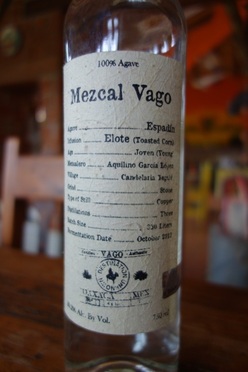
Mezcal Vago is one of a plethora of new brands of the agave-based spirit entering the US from the southern Mexico state of Oaxaca.  Its sweet, swift success harkens back to the tenets of triumph in so many other entrepreneurial endeavors:  hard work, vision and integrity.

The owners of Mezcal Vago aren’t pioneers in the field of exporting artisanal mezcal like Mezcal del Maguey’s Ron Cooper.  Nor are the two American partners directly steeped in generations of family tradition as was the late Don Pedro Mateo of the highly successful commercial brand Benevá.  And to be sure, they don’t have the financial means of Armando Guillermo Prieto, who through an extensive promotional campaign is apparently en route to taking the mediocre  (at best in the minds of some) Zignum “mezcal” through the profit stratosphere. 

Add to the Midas Touch of Mezcal Vago’s Judah Kuper and Dylan Sloan a combination of transparency in everything they do; more than fair compensation for their producers; passion for their product and what it represents; refusing to derogate from their vision; unconventional yet effective marketing; maintaining humility while at the same time being opinionated; taking a calculated gamble; and naturally a bit of good fortune with timely entry into the marketplace.

The seed of Mezcal Vago has been well chronicled by Kuper and Sloan on their website.  It’s a story of fortuitous circumstances, like that of so many innovators in a diversity of commercial enterprises.  It’s been told time and again, though much less so in the world of mezcal if not other alcoholic beverages.

                                   _________________________________


Late one evening in early September, 2014, Kuper is holding court in his small, modestly outfitted office-cum-tasting-room, hosting a group of seven Colombian restauranteurs interested in importing mezcal for their eateries. He explains to them while they sip from a selection of a dozen or so Vago mezcals:

“We’ve been in business for less than two years, and are already established in 17 states, with others ones as well as Canada and Europe on the horizon, so I have to be cautious about expansion because our growth must be maintained in check so that we keep to our vision. When I heard Colombia, it seemed like it might be just a small enough market for us, a good fit, so that’s why I agreed to come to the office tonight to meet with you.”

Beginning about 2005, and continuing to date, the vision for many mezcal entrepreneurs throughout primarily the US and Europe, and also in Mexico City, has been to capitalize on the exponential growth in the spirit’s popularity across the globe, through pursuing a mainly profit motivated export business plan. As one such American commented in the course of seeking my tutelage about the spirit and its distillers back in 2007, “now is the time [for mezcal].” What she meant was the time to make money in the business of exporting mezcal from Mexico.  Hence, she and her brash New York business partner descended upon Oaxaca.  Kuper sees it this way:

“There’s just so much smoke and mirrors in the [mezcal as well as other spirits] business, not from everyone who has jumped on the bandwagon, but from many, the ones who have little concern about  what mezcal has represented to Mexicans over the centuries in terms of livelihood, culture and relationship with the environment.

“In our case, we started with a grassroots campaign, enlisting the help of and targeting chefs, bartenders and spirits geeks, without paying them a cent, just serving them and finding out if we were on the right track with what we personally thought were amazing spirits made by sincere people with fascinating stories to tell. That’s how we started out.

“Many other exporters have begun at the other end, with their marketers, their advertising and promotional firms; how do we promote this particular alcohol and distinguish it from tequila, what kind of a campaign should we mount, what’s trendy, sleek, contemporary and will sell – as opposed to what’s the best product we can get out there. Dylan and I each pooled a modest amount of money before making a commitment.  We did our own website, took all the steps for export certification, and all the rest of the paperwork without lawyers or accountants. You know, we could have gone the way that others have gone, and in fact a Texas clearinghouse wanted to give us $100,000 as a kick-start. We rejected the offer, wisely as luck would have it, and went with someone who had the same vision as ours. With his much more modest financing, we looked after name and trademark, labels and business plan. We were off.”

Kuper and Sloan are different from many [or dare I opine “most”] of the others, in ways aside from rejecting significant startup financing when offered. Kuper had been surfing up and down the Pacific coast of The Americas for eight years before grounding on a stretch of beach near the Oaxacan resort town of Puerto Escondido.  He fell head over heels for a young Oaxacan nurse, whose father was a fourth generation palenquero (in Oaxaca, a small scale artisanal mezcal distiller).  The lovebirds opened a palapa restaurant on the sand, and naturally included Kuper’s (soon-to-be) father-in-law’s mezcal. “I really liked Aquilino’s mezcals,” he explains “but had never given a thought to exporting it or getting into the business until I began to take notice that my restaurant customers really liked it and commented about the quality – the nose, the balance, the nuances, the approachability and everything else, despite it being upwards of 50% alcohol and sometimes more.”

Kuper had previously been exposed to good artisanal mezcal, but its potential for leading to a livelihood for him, and turning the mezcal world towards him, remained in the recesses of his mind – until Aquilino came along.  He comments to the Colombians that if it were not for all the laud that was being heaped upon his father-in-law’s mezcal, “I probably would have continued to be a surf bum, albeit eventually having to find some way to make a living to support my new wife and our baby.”

Aquilino’s mezcals are produced in Candelaria Yegolé, a tiny hamlet of about 200 people, in the furthest reaches of the district of Tlacolula de Matamoros, bordering on the Sierra Sur region of the state. The area has a distinct microclimate with its particular environmental yeasts.  Aquilino harvests his agave from steep mountain slopes with terroirs different from anywhere else.  He uses a traditional copper pot still, or alambique.

“Once Dylan and I decided to each pool our capital to test the waters,” Kuper continues, “we knew that we had to find a second producer, one whose product would both be entirely distinct from yet complement the mezcals that Aquilino had been producing.”

Kuper and Sloan didn’t want to bottle and market a mezcal made by only one palenquero.  “If you use only one distiller whose operation is in one microclimate, no matter how many different mezcals you’re producing, you’re doing yourself and spirits aficionados a disservice, because they will all by definition have a similar character,” Kuper suggests.

“Selling the mezcal made by only one palenquero who ferments and distills in only one area of the state is limiting. We were looking for a completely different line of mezcals, produced by someone else in a different region using a different production method with a different family tradition.  By chance we came across a cousin of my wife’s family, in a different district of the state, Sola de Vega.”

They found Tío Rey, as he’s affectionately known, who for generations has been producing very different mezcals than those of Aquilino.  Much of Tío Rey’s agave is grown in humid river valleys.  Regardless of whether or not the same species or sub-species as Aquilino is used, the climate, terroir and environmental yeasts are so different that Tío Rey’s mezcals must inevitably be different from Aquilino’s.  Combine that with the fact that Tío Rey employs clay pots rather than copper to distill, and the distinctions in the mezcal of the two producers becomes even more profound. And to top matters off, the palenqueros were each from a region more or less underrepresented in the export marketplace.

“I respect so many artisanal palenqueros in the state, and in fact producers in other parts of Mexico. And of course also those exporters who have done what we’re still doing, that is seeking out the best product from the furthest reaches of the state.  We’re still looking for at least one other producer to work with. We’ve driven hours and hours over umpteen back roads looking for a palenquero whose mezcal would nicely supplement what we already have in our stable and who would epitomize the cultural history of mezcal as we see it.”

Kuper acknowledges that Vago’s marketing plan has been to identify the four or five most respected artisanal bands of mezcal in the marketplace, and to improve upon what they’ve been producing.  But at the same time he cautions:

 “I let Aquilino and Tío Rey do their thing, since their families have been making mezcal for generations. I’m just a student of the spirit, learning as I go along, always trying to produce a better product; and so we may have the odd discussion when I suggest something different or a little tweaking, but that’s about it. They’re the maestro palenqueros.”

That humility and respect for those who know more, has been a hallmark of the success of Mezcal Vago.  And it’s part and parcel of Kuper’s transparency in everything he does.

He is outspoken about those producers and exporters who boast that they distill to proof and don’t add water – if indeed that’s the case. “So much depends on the water source, at what point you cut the tails (end of the distillation process), how you work with the tails if you’re going to use them, and so on,” he explains, then continues, that “dogmatism can inhibit your ability to produce a better mezcal.” Ask Kuper which of his palenqueros uses water to bring his mezcal to the preferred percentage alcohol, and how, and he’ll tell you.  Ask him why his labels for his ensambles (blends) state the percentage used of each agave species or sub-species, and he’ll tell you: 

“I have nothing to hide.  I know that there are producers out there who simply state the names of the agave used to produce an ensamble because they consider disclosing any more details tantamount to giving away a trade secret.  But I would rather indicate percentages, so the consumer knows exactly what he’s getting, and is better able to refine his palate, distinguish nuances of particular agaves, and so on.  If I simply stated on my label that the bottle contains espadín, tobalá and cuishe, how is that really helping the consumer, if for example espadín is 90% of the blend?”

When asked about his labels, and their similarities in some respects to other brands on the market:

“What I said before within the context of wanting to take the best and  improve upon other artisanal mezcals in the marketplace, applies here as well. We have a massive respect for brands like Mezcaloteca which committed to sharing every detail of the process of creating its mezcals and out of total respect follow suit because that’s the way all labels should be.  We felt that another brand that used a bit of agave fiber in its labels was an amazing idea and took it a leap further by making our labels 100% from the used agave mash after distillation.”

For many in the business, more taboo that the issue of water, is the use of chemicals to speed up the fermentation process, especially during the cold weather months.  While neither he nor anyone else dare whistle blow, and although Kuper states that he will never work with a palenquero who adds anything to the fermentation vat, he understands that “other companies view chemicals as food for yeast” and that “they can improve fermentation rates and yields.” But he steadfastly asserts that “it’s not for us and never will be.” Enough said.

With Sloan based in the US and Kuper in Oaxaca, Mezcal Vago is in an advantageous position in terms of being able to keep an eye on what their palenqueros are doing, and how.  As Kuper puts it, “it’s important to have your foot in both worlds.” An industry insider from the US northwest sees it this way:

“One partner is watching what’s going on with his production and the market from on the ground in Oaxaca, while the other is getting a balanced sense from living in the US.  It’s really something; Vago is in every bar I visit.”

Both Kuper and Sloan make a point of visiting each of their markets once or twice a year, travelling one out of every five or six weeks.  And they are even more hands on.  For example, Kuper picks up his federal “verificadores” (agents of the regulatory board, COMERCAM) to take them to his palenques to be sure that there are no delays in getting his mezcals certified for export; and he works with his wife, friends and neighbors doing all the bottling and labelling on their own.

“This is a family business, and we want it to remain as such. After all, that’s the way it’s been for ages.  You lose something if you deviate from the model which has brought you initial success.  I know of export brands which have dramatically increased output but in the process have put a strain on production and their palenquero partners, through hiring lots of outsiders, building more and more stills, altering fermentation methods, and buying agave from further and further away from the villages where the mezcal is being produced.  And you know what, I’ve witnessed those brands losing shelf space in the stores of major US retailers. Perhaps I’m naïve, but Dylan and I won’t let that happen to Mezcal Vago. It’s important to us that our palenqueros’ roots and age old means of production are respected.”

Mezcal Vago will have its growing pains as have other producers and exporters, but the partners are steadfast in their resolve that their original vision must be maintained at all cost – even if it has to mean turning their backs on Colombia.

“Mezcal is so pure, just agave, heat, water, and yeasts from the natural environment. It’s so simple. There is truth in mezcal. I want everyone who sips Mezcal Vago to be taken on a journey to real, rural Mexico, to get a sense of place with each sip. I even want them to sense something by merely picking up a bottle; I want them to feel like they’re holding something from an earlier era. Their hearts rates should race with a sense of adventure. I want them to appreciate the history of the families of our producers.”

Kuper is referring to the pride in family tradition, which he believes must be maintained in order for their mezcals to retain the highest quality.  Bringing in outsiders to help produce would change that.  Introducing different production methods would change that.  Using agave that has no relationship to the palenquero, his family or his land would change that.

“We also feel the weight of our family’s needs on our shoulders, and respect that.  Not a single drop of mezcal has ever been bottled until Aquilino and Tío Rey have been paid in full for their effort.  We don’t subscribe to the philosophy of 50% when ordered and the other 50% when it’s on the pallet ready to leave the village for the border.  Once they’ve distilled, they have complied with their primary obligation to us, that is, to produce a quality spirit.  They should not have to wait any longer to get paid. If our mezcals are a bit more expensive that some others, and certainly that’s the case, it’s because we pay our palenqueros sometimes even more than they want.  If there’s any price negotiation, it’s us trying to pay more to them, really. I don’t like labels, but I suppose it’s akin to a fair trade practice to the extreme. Aquilino and Tio Rey are the keys to our success more than any other factor and so we must treat them as such. But it shows in the quality they keep on producing for us.”

Previously, Aquilino didn’t much ponder the relationship of his family with the land, water, agave, and ultimately his mezcal.  He was too busy eking out a subsistence though sufficient living.  Both he and Tío Rey in fact exemplify mezcal as permaculture.  They used to take it all for granted.  But now, with mezcal lovers from all corner of the globe making pilgrimage by descending upon Oaxaca, and asking to visit Candelaria Yegolé and the hinterland of Sola de Vega, to meet and pay homage to the producers of Mezcal Vago, Aquilino and Tío Rey now get it, and they feel an enhanced sense of pride in their craft; which in turn feeds the desire to keep producing mezcals of excellence, as tribute to their heritage.

The Colombians left Oaxaca, sold on Mezcal Vago after learning of the existence of the brand only a couple of hours earlier. Whether they can convince Kuper and Sloan that their market is worthy of the mezcals of Aquilino and Tío Rey, is a question yet to be answered.

Alvin Starkman owns and operates Mezcal Educational Excursions of Oaxaca. He is the author of Mezcal in the Global Spirits Market:  Unrivalled Complexity, Innumerable Nuances, (Oaxaca, MX:  Carteles Editores – P.G.O., 2014).


Aged Mezcals in Mexico:  A Strong Case in Their Favor

8/5/2014

 
Imagen
Alvin Starkman, M.A., J.D.

Mezcal producers can do as they wish, promoting their products as blancos, aging their distillates in glass, or resting them in oak. Barreling, however, has received unfair and inappropriate denigration of late. Yes, a case can and should be made for critiquing the sale of heavily infused and often sweetened agave-based spirits occasionally mixed with cane alcohol, under the guise of being mezcal. But distillers, vendors, exporters, agents, journalists, and those who would otherwise pretend to market the distillate for the benefit of the industry, ought to rethink poo-pooing a
quality mezcal which has been barrel aged. 

Indeed the sale of the iconic spirit in the international marketplace as well as throughout major cities in Mexico has skyrocketed over the past several years, in large part due to the ever increasing diversity of un-aged product available for purchase.  But we should remember that many consumers of spirits have, over the decades and indeed for much longer, gravitated to premium aged tequilas,
brandies and single malt scotches.  And they still seek out and covet quality, barreled liquor. Should we ignore courting them with mezcal reposado and añejo? 

I can live with one writer’s commentary that blancos are the best way to appreciate mezcals. 
But other promoters go much further. One marketer outright advises against buying mezcal aged in oak, stating that oak destroys the flavors and delicate aromas of the liquor. Is changes not a more accurate and less subjective assertion? Another, an exporter, states on his website that storing or aging mezcal in wood should be avoided as it chemically alters the mezcal, adding flavors that traditionally were not there. To its credit it prefaces with the words “it is our belief,” rather
than spewing as gospel.  Beliefs change, and in this case the entrepreneur is in fact toying with the idea of barrel aging, even in the face of the bold avoidance advice. 

Some producers and their exporters are quietly experimenting with barreling.  Chemical engineers number amongst very successful distillers, and they select their barrels with great care in order to create very specific subtle differences in nuance.  Canadian, American and French oak are generally used; new, or retooled from use making Kentucky bourbon, French brandy, and so on.  Charring also has its place in the science of chemically altering, in a positive fashion, the agave-based spirit in
order to achieve a particular taste. In fact one Oaxacan palenquero, a chemical engineer, for decades has been creating a range of exquisite aged mezcals.  Only some of his export clients have
reached this realization and as a result have been marketing a range of his reposados and añejos. The rest will likely awaken, but not until the tides change.  

What do we do with a writer who chastises those who would use mezcal as a mixer for cocktails, referring to their bastardization of the spirit, and then turns around and holds a cocktail evening at his mezcalería?   Is the written word in the industry akin to a politician’s campaign promises?  Or should we write it all off as good, healthy, fair play capitalism – or perhaps growth on his part? 
 
Granted, I currently drink much more joven than I did ten years ago; the diversity of agave used to produce mezcal is much broader now than before, thus expanding availability of mezcals made with
different magueys and subspecies thereof. By contrast, decades ago producers making mezcal with other than simply espadín, would bake, crush, ferment and distill whatever they found, and lump it all together as mezcal silvestre (wild). Not so now. A unique botanical or common name tends to fetch a higher price than labeling as merely wild (i.e. karwinskii [madrecuishe, cirial, tobasiche, marteño, bicuixe], potatorum [tobalá, mariposa], marmorata [tepeztate, curandero], rhodacantha [mexicano, de monte], cupreata [papalote, ancho], and the lists go on.

I don´t often drink aged, truth be told.  However, after my single malt collection has been left dormant for several months, I look up high on the shelf, decide I want something different, and pull down one or two bottles, dust them off, and imbibe.  Then, after asking myself why I have been ignoring such rich, aromatic and flavorful spirits, I begin to look to my aged mezcals; I thereby re-learn to appreciate particularly añejos.  

Indeed, the Glenmorangie single malt scotch distillery has an aged whisky line of 15 different products, each distinctly barreled based on number of years, and cask type (i.e. sherry, port, sauternes, super Tuscan extra matured, extra matured in Pedro Ximenez sherry, Spanish and American). The aromas and flavors of the spirit first produced at the Morangie Farm in 1738, have evolved, yes through chemical alteration; and today’s single malt scotch whiskies have flavors which were traditionally not there. Is that a bad thing?

It’s time we begin to check our dogmatism cloaked as expertise, and opinion masked as fact. It’s all fine and dandy to profess being an authority, but not if we harm the growth and development of the industry as a consequence of novice mezcal drinkers actually believing that we are experts to whom an inordinate amount of deference should be shown.

Alvin Starkman is the co-creater of the only full color comprehensive bilingual mezcal tasting wheel.  He is the author of Mezcal in the Global Spirits Market:  Unrivaled Complexity, Innumerable Nuances.  Alvin owns and operates Mezcal Educational Excursions of Oaxaca (http://www.mezcaleducationaltours.com).
 

History of Chango Mezcalero Oaxacan Monkey Mezcal Bottle Clarified, Again: Ernesto Vásquez Reyes of Atzompa, Holds Court in June, 2014

7/7/2014

 
Imagen
Picture
Alvin Starkman, M.A., J.D.

I have twice written about the history of the highly collectible vintage chango mezcalero. The clay vessel in the shape of a monkey and commonly used to hold and market Mexico’s iconic spirit, mezcal, has long intrigued both folk art collectors and ardent aficionados of the distillate.  Why a monkey? Where and when was the art form first produced?  I opined that a meeting with a founding father of the Aztompa pottery tradition would further elucidate, and perhaps even lay the matter to rest. 

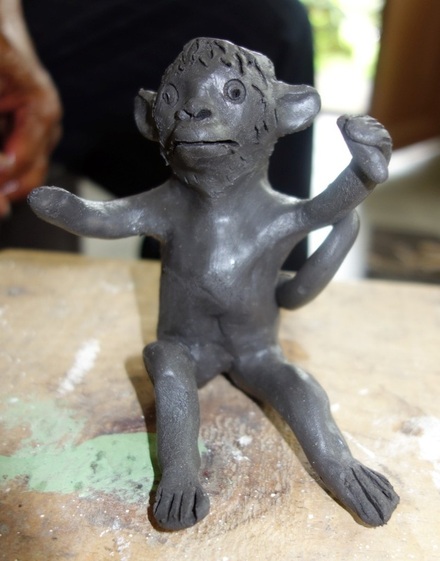
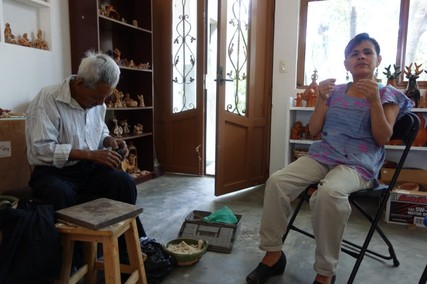
Ernesto Vásquez Reyes, the 90 year old father of acclaimed clay sculptor Angélica Vásquez Cruz, sits on a black vinyl covered ottoman at his daughter’s workshop in Santa María Atzompa.  At Angélica’s request, on this particular afternoon in June, 2014, Don Ernesto is sculpting a clay mezcal monkey bottle, the infamous chango
mezcalero.  They want to illustrate how he used to make the receptacles, one of the earliest forms of Oaxacan folk art.  But somewhat surprisingly, it is revealed that the flasks that Don Ernesto used to fashion were not for holding mezcal, at least initially.  

Atzompa is about a 20 minute drive from Oaxaca, the colonial city in south central Mexico. For decades Atzompa has been known for its green glazed pottery, though a few sculptors such as Angélica have stepped out of the mold and achieved international praise for their production of purely decorative, museum quality folk art. Oaxaca and its encircling central valleys are noted for pre-Hispanic ruins, colonial architecture including exquisite Dominican churches, the best cuisine in all Mexico, craft villages including those which produce clay products, and, the agave-based spirit
mezcal.

The thinking has been that monos or changos, that is monkeys, have long been associated with drunkenness, and thus the non-human primate form was an appropriate way to capture the interest of those who would gift something apropos to the habitual agave-based spirit imbiber. I had uncovered competing claims to the invention of the bottle, by two families in San Bartolo Coyotepec.  

Since the 1950s San Bartolo Coyotepec has been renowned for black pottery.  Before then and dating to pre-Hispanic time, most villagers had made their living producing and selling or trading grey functional pottery. These pieces had been fired for 12 hours or more, thereby enabling them to hold liquids.  The innovation of barro negro by the famed San Bartolo Coyotepec potter Doña Rosa Real Mateo, had led to the proliferation of an industry based on the production of non-utilitarian shiny black pottery – barro negro.  It does not hold water because it has been fired in a wood burning kiln under low heat for only 8 – 9 hours.

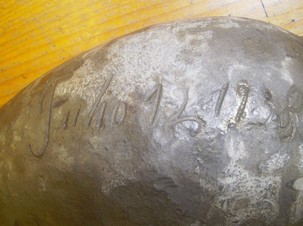
The discovery of a clay chango mezcalero mold dated July 12, 1938, packed away in one of the dusty old boxes of memorabilia of Doña Rosa’s husband Juventino Nieto Real, and discussion with his heirs, appeared to conclude the inquiry.  A reasoned assumption was that chango mezcalero was first innovated in San Bartolo Coyotepec by Juventino Nieto Real in 1938. 


Imagen
However, questions persisted.  What about the contemporary chango industry in the self-proclaimed World Capital of Mezcal, Santiago Matatlán, one of the earliest colonial settlements? Furthermore, the Águilar Alcántara sisters, well-known potters of Ocotlán de Morelos, advance that their mother Isaura Alvántara had made clay monkey bottles in the 1940s, and possibly earlier.  And finally,
Don Ernesto’s daughter Angélica indicated to me before this more recent encounter, that her father had been making chango mezcaleros since the first half of the last century.  In fact
a few months earlier he had made some for me. 


Imagen
Imagen
Imagen
Don Ernesto begins by pounding out enough Play-Doh pliable clay to make the chango.  He sends one of his grandsons out back to fetch a 1½” diameter, 5” length of tree limb.  He fashions the clay
completely around the branch.  “This is the only kind of mold I have ever used,” he quietly yet firmly
asserts, as he carefully removes the limb from the clay, yielding a perfect cylinder.  “I would usually make these little men quite a bit larger, to hold a liter, perhaps less.” Don Ernesto then confides that he still has the same bottle “mold” at home that he always used to make his larger changos. 
The form had been acquired by his grandfather during or about 1835.

Little men? Maestro Ernesto proceeds to relate a couple of legends about monkeys, how they were at one time men who were mysteriously transformed into monkeys, then boulders at the base of a monolith; and how they would seemingly at will change from human to simian:

“That’s why I call them little men, and that’s why we started making them out of clay, a sort of homage to the stories passed down; no, to me chango mezcaleros as you call them, the ones I used to make, had no relationship to drunkenness, and in fact in our village we did not make them to hold mezcal, just water.”

With hands still nimble despite advancing years, he forms the legs, arms, tail and head, asking for a sharp object to make facial features.  “Can someone get me a cactus needle,” he implores. 

Don Ernesto concedes in matter-of-fact fashion that the real chango mezcalero, the clay monkey shaped and sometimes painted bottle which was used for mezcal, came from San Bartolo Coyotepec:

“The clay from our area would not hold mezcal; water yes. Water easily seals our type of clay once baked, so the water in the receptacle doesn’t seep or evaporate.  But not so if we fill a bottle with
mezcal; after a while it would begin to disappear.” 

As a young boy in the 1930s, Don Ernesto began making clay figures in the form of monkeys and other creatures which were of significance in his life, though perhaps not as important as the “little
men.”  Then towards the end of the decade, curiously around the time Don Juventino began making his chango mezcaleros from that now famous mold, Don Ernesto began making clay bottles in
the form of monkeys.  But they were used strictly for water.  It was not until a decade or two later that glazes began to be used in the village, so distilled liquids such as mezcal could be held without seepage or evaporation. 
 
Since the use of glazes post-dated Don Juventino’s 1938 monkey mold, we can confidently conclude that Atzompa was not the cradle of chango mezcalero.  However, it certainly does not take a great leap of faith to see how the more modern changos Don Ernesto produced for me would pique the fancy of collectors of both Mexican folk art and mezcal paraphernalia.  The chango has the form, now capacity to hold the spirit, and the ability to capture the imagination of those who would display it in a place of prominence in a home, bar or mezcaleria. It speaks a story.  

Research continues with a view to more comprehensively filling in the history of chango mezcalero in Oaxaca.  The complete tale of the clay monkey bottle has yet to be definitively told. 

Alvin Starkman has been an aficionado of Mexican distilled and fermented beverages for over two decades.  He runs Mezcal Educational Excursions of Oaxaca. Alvin is the author of Mezcal in the Global Spirits Market:  Unrivalled Complexity, Innumerable Nuances, and co-author of the only full color comprehensive bilingual mezcal tasting wheel.


Miniatures Artist from Oaxaca, Mexico:  Miguel Ángel Martínez Reyes Magnifies with Magnificence

4/29/2014

 
Picture


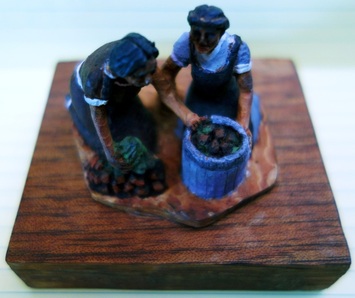
The base of this miniatures carving is about 3 cm X 3 cm, colored with cochineal (cochinilla), and made from wood of the pochote tree, depicting a typical market scene in Mexico. 

Alvin Starkman, M.A., J.D.

Despite having carved miniatures as small as 1 mm in size, the only time Oaxacan folk artist Miguel Ángel Martínez Reyes has used a magnifying glass has been when exhibiting his remarkable artwork to the public. “I have excellent eyesight, and I rarely work using artificial light; the exception being when I’m  under the gun to complete a piece with a certain deadline, which happens infrequently,” explains Martínez Reyes one morning while we’re having breakfast with his artist colleague Dolores Leycegui. “My work is so small and detailed that sometimes people would ask if I had a magnifying glass to help them better appreciate my art, so I began bringing one to my exhibitions,” he continues. 
 
The 34 year old master of the diminutive has shown his art as far away as in Treviso, Italy; as well as in Mexico City, Oaxaca and hometown city Miahuatlán de Porfirio Díaz.  The 2013 Italian museum exhibition was part of a global tribute to famed Mexican painter Frida Kahlo. He donated his creation, a carving in miniature of Kahlo and Diego Rivera made of wood from the pochote tree, to the
museum, as a gesture of his gratitude for having been invited. 

“I work with wood from the pochote tree because it’s soft, but for me bone is more elegant though more difficult and time consuming; when I have been commissioned to do a specific piece, or if I
have a particular theme in mind which lends itself to using bone, that’s my preference,” explains Martínez Reyes.

Dating as far back as he can remember, Martínez Reyes enjoyed drawing.  But it was when he was nine years of age while climbing pochote trees with his friends, that he took notice of the whimsical knots, texture,  and color in the trunk and branches of the tree.  

Scaling pochotes with his friends provided the initial inspiration for creating miniatures.  He continued carving, making pieces with greater detail as he got older.  Out of economic necessity he took a two year hiatus from his work to sojourn to the US. Realizing that “The American Dream” would likely continue to elude him, he returned home to Oaxaca.  It was upon his return when he was about 19 years of age, that he began using beef bone as his preferred medium.  From that point
onward Martínez Reyes recognized that carving would be his calling in life.  

Only the extent of his imagination restricts the subject matter of Martínez Reyes’ work, although women provide his strongest stimulus.  “I hold women in the highest esteem, and thus I respect and admire them; after all, a woman gave me life, so how can I think otherwise,” he asks rhetorically. He speaks of the mother earth theme in some of his work, which bears the fruit of life.  

The wizard of whittle gingerly digs into a knapsack and carefully removes his work.  He cradles in his hands, as if ready to disclose the delicate petals of a flower in bloom, a number of his pieces.  They include a mermaid, as well as two indigenous women kneeling at work both hewn from pochote.  There are also bone pieces with religious imagery.  His 1 mm work is a nativity scene, each figure carved on the top of a toothpick. 

“I still work with pochote, as well as with cedar, cypress and other woods, and even fruit seeds,” he continues as he shows me two carvings in peach pits.”  Martínez Reyes’ array of mediums also includes pits from other fruits including tamarind and mamey, coconut and pecan shell, agave needles, tree root, as well as stone and minerals including limestone, amber, jade, turquoise and
obsidian. His current endeavor is a bone catrina figure.

The range of materials Martínez Reyes uses dictates using a wide variety of tools. I use needles and pins, x-acto knives, gouges and chisels, and whatever piece of metal or iron I can sharpen to a fine point, as long as I can use it for doing detailed work,” he explains as he extracts a number of slight carving tools from his bag of treasures.  To carve harder materials including some stone, minerals and bone, he uses more sophisticated precision instruments, including dentist drills and tools used by jewelers.  And yes, he often carves jewelry pieces such as pendants and earrings, frequently for
custom orders.

Martínez Reyes is self-taught.  And while he has given a number of workshops on miniatures carving, he himself has never taken a lesson in any realm related to art.  Yet he is a grand master, having received national recognition on several occasions.  Most recently, in March, 2014, he attended a competition in Mexico City along with some 3,000 other folk artists, sponsored in part by FONART (the national fund for the development of arts and crafts).  In the category of miniatures folk art, he took 3rd place and received a grand national folk art prize.  

Nevertheless, with national recognition, close to two dozen exhibitions to his credit, and international exposure, Martínez Reyes continues to struggle.  “Yes, I was invited to Mexico City and am grateful for having been given the opportunity to participate and for the judges’ recognition of the quality of
my work.”  But an ongoing issue remains in the minds of many in the arts community, as to whether or not the state of Oaxaca provides sufficient support for both its promising and many of its well-established artists and folk artists. In the case of Martínez Reyes, his life’s dream is to be the director of a miniatures museum, so that there will be greater global appreciation of his art form. 

However Martínez Reyes has a more attainable project in mind for the foreseeable future. He wants to make bone carvings of 20 of Michelangelo’s most renowned works of art, naturally in miniature, for a one-week show at the same museum which featured his Frida / Diego sculpture last year.   It is neither a pipedream nor mere vision. The museum’s curator has not only expressed interest, but has assured him of an individual exhibition of the works, and payment for his ground expenses.  He requires only modest sponsorship funding to cover his return airfare to Treviso.  Shockingly, he can’t find it. 
 
My interview concludes on a troubling, disheartening note. I return home, all the while trying to figure out how to help him.  I phone him, proposing that he secure a written invitation from the curator, committing to the one-week show and expenses while in Italy.  I suggest that he then arrange an interview with someone high up in the ministry of tourism and the economy for the state of Oaxaca, to present the idea – and the Italian commitment.  How could Oaxaca deny such a request?  
 
Return airfare to Italy within the context of such a show would yield millions in tourism for the state of Oaxaca.  And if the state denied the request?  There’s always the media.  Then, not only would donors be knocking at his door; the state might just wake up to the grand opportunity from supporting a maestro of miniatures like Miguel Ángel Martínez Reyes.  
Alvin Starkman has been a resident of Oaxaca since 2004.  Alvin has written over 280 articles about life and cultural traditions in Oaxaca. He operates Casa Machaya Oaxaca Bed & Breakfast and Mezcal Educational Excursions of Oaxaca. Alvin holds an M.A. in Social Anthropology from York University and a J.D. from Osgoode Hall Law School. He is the author of Mezcal in the Global Spirits Market:  Unrivalled Complexity, Innumerable Nuances (Oaxaca, MX:  Carteles Editores – P.G.O., 2014)


Downtown Oaxaca Walking Tour

4/15/2014

 
Picture


Street vendor in front of outdoor café on Oaxaca's zócalo.

Many visitors to the south central Mexico colonial city of Oaxaca spend only two or three full days here (aside from touring the central valley routes), not long enough to really learn about its
cultural history, its contemporary greatness, and a little about its underbelly.  There are indeed some detailed walking tours of the city contained in some guide books, but each of the three or four downtown routes requires a couple of hours to complete, if justice is to be done.  

One tour a day is often all that tourists have the stamina to do, given the sun, the elevation and jet lag. This, then, is a down-and-dirty single touring route for those who will be in the city for only a short period of time, and want a brief overview of what there is available.  It is suggested that
you do the tour your first full day, in the morning, and then return to the places which pique your interest later on in your visit. 

Upon your arrival, obtain a complimentary Oaxaca city map from your lodging.  All accommodations give them out for free. The centro histórico, or downtown historic center, is usually clearly demarcated, and all the streets noted in this tour route should be noted.  The walk takes a couple of hours.  It begins at the upper end of Calle Garcia Vigil, and concludes at Calle Morelos, near the Soledad church, towards the west end of downtown.  There, at the Jardín Socrates, you can relax and enjoy a fresh, cool nieve, or sherbet. If you’re not up to walking without a break for a full two hours, you can stop for a drink and snack mid-way, at one of the outdoor restaurants lining the main downtown square, or zócalo. Consider Terranova, east side of the zócalo, second outdoor restaurant from the bottom.

Beginning the tour, walk up Garcia Vigil until you see the old stone arches on the left.  This area is known as Los Arquitos.  This was a functioning aqueduct, built during the 18th century by the Spanish, delivering water to the city from a few miles further north, a suburb now known as San
Felipe del Agua.  Additional lengths of the aqueduct are as well found outside of the city and northern suburb.  The aqueduct originally continued further downtown, with arteries extending out from it in both directions, enabling residents to obtain water. Note that the stone used in its
construction is green limestone, used in most city construction during colonial times. It was also used to construct pre-Hispanic buildings.  It is still used today together with cement and reinforced steel to build retaining walls for both residential and commercial buildings, and as interior adorning accents.  You’ll no doubt come across the more common green stone, but perhaps also hues of pink and yellow during your visit to Oaxaca. 

Los Arquitos now houses the odd restaurant, business, and home; in some cases you can walk through the archways and onto cobblestone streets.  This is one of the quaintest neighborhoods in
Oaxaca!

Turn around and begin walking back south.  On your right, up a flight of exterior stairs you’ll encounter a state run craft store (ARIPO) with a smattering of artisans’ works from throughout the state.  Take a look through the store since it will give you an idea of what you’ll be coming across during your visit to the city and outlying craft villages.  Don’t hesitate to buy, notwithstanding that this will be your first day in Oaxaca, because the quality is good, and prices are not out of line. 
On the other hand, you might want to simply make a mental note of items you like, and the prices, and consider returning to the store just before concluding the Oaxaca segment of your vacation. 

Continue along Garcia Vigil, up a bit and then begin the descent.  About a block down on your right you’ll see the Benito Juárez museum, a home where Benito Juárez, Mexico’s first indigenous president, lived for part of his life.  It contains period furniture, original documents and photos, and an explanation about Juarez´s importance, accomplishments, etc. Personally, I think there are much better museums in the city, but some history buffs might be interested in coming back and touring it. 

Across the street and a bit further down is the Carmen Alto church.  It was founded on the site of an Aztec temple which was dedicated to the corn deity.  What better way to attempt to stamp out indigenous religions, than for the Spanish to build a Catholic church right on top of a native temple. 
This kind of thing was repeated time and again throughout Mexico, and in Oaxaca in particular (i.e. building the church at Mitla on top of an indigenous temple, using stones hewn by hand by the natives to build their own religious and administrative buildings). The Carmen Alto (las carmelitas descalsas) church restricted attendance to whites into the second half of the 20th century; those with overt signs of indigenous blood were restricted to praying in Carmen Bajo. 

Turn left at the bottom of Carmen Alto, down a paved, wide pathway with shops on the right. 
It’s only a one-block walkway.  On the right, halfway down is a small variety store, or so it seems.  There are two rooms filled with contemporary and vintage masks for sale, but if the owner isn’t there you cannot get into that part of the shop.

You’ve passed by several bohemian-looking street vendors, and are now at the city’s main pedestrian walkway, Macedonio Alcalá, where you turn right.  On your left is part of the ethnobotanical gardens, with high walls.  Walking down, on your right is the Institute of Graphic Arts, donated to the city by renowned Oaxacan artist Francisco Toledo.  It houses a library and store where you can purchase items made in the hand-made paper factory located outside of the city at San Agustín Etla, also noted for its spectacular fine arts center housed in a restored 19th century textile mill. 

On your left is the complex housing the Santa Domingo church and cultural center.  Take a peek into the church, and remember it for a return visit. It’s the most elaborate church in this part of Mexico, with amazing gold, biblical stories painted on the domed ceiling, etc.  The cultural center / museum is one of the finest in all Mexico, and if justice is to be done takes a couple of hours to wander through. The ex-convent itself is quite amazing. On the other (back) side of the church and cultural
center is the entrance to the enthnobotanical gardens (on Calle Reforma).  In revolutionary times it served as a cavalry barracks.  If you decide to do the ethnobotanical tour it must be done with an on-site guide.  Check, but English guided tours are generally on Tuesdays, Thursdays and
Saturdays at 11 am, and during high tourist season should be booked in advance.

But stay on Alcalá, walking a block further down where you will turn left at the Jardín Labastida (your street map with show M. Bravo to the right, and Abasolo to the left; around the time of the
revolution many street names changed, but your map should have the current names; in addition, some street names change at Alcalá, and others at Independencia.)

Before turning onto Jardín Labastida, just down Alcalá on the right side you should note Amate Books, the most comprehensive English language bookstore in the city. Now continue along the
Jardín Labastida, along the middle walkway, and at the end you will find a reproduction of an early “toma agua” where locals would attend to “take water” from one of the arteries leading out from the aqueduct. The park used to be a place where young artists would sell their work, and often would get their start.  The municipality decided around 2012 that it would no longer allow artists to use the park, a pity to my thinking.  

Turn right at the far end of the park by the toma agua, and head down Calle 5 de Mayo.  The left side of the street is completely taken up by the exterior walls of the luxurious Quinta Real
hotel.  Over the centuries it had housed municipal offices, a jail and a convent.  You can freely walk through the hotel from 9 am to 7 pm, so use this as an opportunity to stroll through history, looking at the refurbished frescoes, the lavabos (wash basins) which were used by the nuns, etc. 

Continue heading down 5 de Mayo, and turn right at the first corner, onto Murguia. On your right you’ll see Arte de Oaxaca, one of the best and oldest art galleries in the city, usually with high
quality rotating exhibits.  There is a permanent exhibit dedicated to the late great master of Mexican art, Oaxacan Rodolfo Morales. His influence can be seen in the work of most contemporary local artists.

Turn left onto M. Alcalá.  On the south east corner you’ll find Taller de Orfebre, a good, quality
jewelry store. Keep walking down.  On your left you will come across the museum of contemporary art of Oaxaca (MACO), worth a visit at a later time.  On Calle Morelos, just west of Alcalá on the north side you’ll see Monte de Piedad, the oldest pawn shop in the city, with something for everyone, but only at times, so you likely will not want to check it out, noteworthy as it is. 

Still on Alcalá, south of Morelos on the right side is the law school, virtually across the street from, sorry, Burger King. On the left side, a bit up, is an old bookstore, Grañen Porrua.  Walk through to the back and you’ll see a wall with a work of art by craftsman José Luis Garcia, a well-known artist
from nearby Ocotlán de Morelos, known for its Friday marketplace. 

Keep walking down Alcalá.  The name changes at Independencia, and traffic on the street begins. But keep walking straight down and you’ll hit Oaxaca’s famed central square, its zócalo. 

The zócalo has been important throughout history as a meeting place, for prominent locals to be seen and to mingle, and more significantly for protesters to air their grievances. Oaxaca’s zócalo is synonymous with civil unrest and disobedience, but it is virtually always a safe place to be, to have a meal or drinks and snacks and to people watch. Every night there is action on the zócalo, with mariachis, marimbas, and throughout the week on specific days the state band and dancing events such as for danzón. A good website which outlines both permanent weekly and short-run
activities is http://www.oaxacacalendar.com.  On the south side of the zócalo, where there are usually protesters, is the municipal palace, now housing art exhibits.  It is also home of a famous mural depicting the history of Mexico.  

Before walking up the other (west) side of the zócalo, note that there are two must-visit markets southwest of the zócalo, down a block and over to the west, the Benito Juárez and 20 de Noviembre
markets.  Do not miss them, if only for walk throughs.  They are marked on your maps.  Now walking up that west side of the zócalo you will pass by additional outdoor cafés and upstairs
restaurants. 

Just beyond the zócalo proper is another square, the Alameda de León, with the Cathedral on the right, and a landmark old hotel on the left, Hotel Monte Albán with some of the oldest original ironwork on the exterior that you will see in the city. Just up from it is the post office, and
on the other side of the street in front of you, Independencia, is the Museo de los Pintores Oaxaqueños, usually worth a look see, perhaps on a gallery hopping day.  Before leaving the Alameda, walk through the Cathedral and notice that the pulpit is in the middle rather than at the end, and the unusual seating arrangement. 

Turn left on Independencia.  On the right side of the street, at the corner of Tinoco y Palacios, is
the San Felipe Neri church, where Benito Juárez wed. The inside has the best example of Baroque architecture that you will likely find in the state, certainly during your visit to the city. Across from the church is the Carmen Bajo church, a low building.  During a major earthquake over a hundred years ago, it was destroyed and then rebuilt. By contrast, San Felipe Neri was not significantly damaged, so the original structure remains.  The bedrock on the north side of the street is different from that on the south side, and hence one church stood while the other fell. 
 
Continue walking west along Independencia until you come across an outside staircase on your right, just before the Soledad temple. Walk up the stairs, visit the church (known for the story of the
Virgin of the Soledad), and then sit down at one of the outdoor stands at Jardín Socrates for a cool, refreshing nieve, sherbet made with either water or milk.  The range of flavors is remarkable. On the north east end of the square is the school of fine arts.  While Oaxaca does not have a particularly good reputation for education, fine arts and linguistics are exceptions.

Above Jardín Socrates and to the west of the fine arts school is a large open area with seating, Plaza de la Danza where there are frequently artistic performances.

Your tour is coming to an end, so walk back to your hotel, presumably to the east, along Morelos, the street above Independencia at the top of Plaza de la Danza.  A couple of blocks over, as you are
walking back, on the north side of Morelos you will see the Rufino Tamayo Museum of Pre-Hispanic Art.  Make a mental note of it, and the days and hours of operation, since it is a really nice, well
arranged museum with exquisite figures in it, easily seen in a half hour or so.  Even for those who are generally not museum-goers, this one should pique your interest.

Enjoy Oaxaca!

Alvin Starkman first visited Oaxaca in the late 1960s, as a teenager.  He was a He frequently walked the city streets between 1991 and 2004, when he took up permanent residency.  He now
occasionally takes visitors to learn about the central valley sights such as craft villages, natural wonders, etc, specializing in the culture of Oaxaca’s premium spirit, mezcal, as well as the pre-Hispanic drink pulque.  He can be reached at
[email protected]. His wife operates Casa Machaya Oaxaca Bed & Breakfast (http://www.casamachaya.com). 


Oaxaca Mezcal Chocolate Pairing Evening Exposes Complex Issues

4/12/2014

 
Picture


Chefs Arcelia Gallardo & Pilar Cabrera, at the Restaurante La Olla chocolate / mezcal pairing evening, in March, 2014

She’s a tease. There’s no doubt about it. “No, not yet, you have to wait until I’m done first, please,” she entreats.  While the foreplay is interesting, and sensuous to the extreme, I want to jump right in – and get at the three young mezcals, with 18 chocolates set up in front of them.  

The evening was billed a mezcal and chocolate pairing event, or a maridaje in local parlance, held at Restaurante La Olla in downtown Oaxaca.  It was hosted by owners Chef Pilar Cabrera and Ing. Luis Espinoza, and their special guest, chef/chocolatier Arcelia Gallardo.[1]  Mezcal brands Koch and Vago were featured.

Of course Chef Gallardo simply wanted us to hold off delving into her enticing chocolates alluringly set in front of us, with water at the ready and three mezcals in the wait. The idea was to direct us
when to sample what, in the course of her discourse. 

This was more than a mezcal and chocolate combining encounter.  It was a treatise on the history of cacao, a lesson on the production of chocolate, and a discussion of its different formulations based on country / continent of origin.  In addition, of course, there was the main focus, learning an appreciation of different mezcals as paired with a variety of chocolates.  Each chocolate had been hand-crafted that very day by Chef Gallardo using Oaxacan ingredients she had earlier sourced with the assistance of Chef Pilar.

“I came to Oaxaca principally to learn about the region’s unique flavors and ingredients, with a view to experimenting with how I could incorporate what I discovered into my chocolate,” she explained. 

Yes, the packed house learned about chocolate’s Mesoamerican origins, the differences between South American, African and American cacao concoctions, what exactly white chocolate is, why
chocolate melts in your mouth (and in fact in your hands), and tasting notes relative to each sample devoured.  But for me, a mezcal aficionado and researcher for in excess of two decades, what struck home most were the elements in common between and contrasted with cacao and chocolate on the one hand, and the iconic Mexican spirit on the other. 

Naturally I was interested in everything Chef Gallardo had to say, given that it was all new to me; and who doesn’t have an interest in the wherefores and whys of chocolate?  But I continually found myself relating what I was being coached about cacao and chocolate, to mezcal as well as pulque. 

The Historical Record

In tracing the use of cacao to the Olmec civilization some 3,000 years ago, our grand maestra noted that residue of the cacao compound theobromine has been found in pottery vessels, evidencing its
earliest consumption in Belize and Guatemala.  My interest initially piqued recalling that archaeologists in Mexico have found clay pots with traces of alcohol, leading them to theorize about a pre-Hispanic distillation tradition.  Many Mexican spirits thinkers take issue with this latter reasoning, primarily because there have not been codices, pictographs and the like found, detailing distillation as a cultural indicia among indigenous groups. The more accepted thinking is that the Spanish learned distillation from the Moors, and subsequently brought this knowledge to The New World, no earlier than in the first quarter of the 16th century. 
 
With her powerpoint presentation Chef Gallardo showed us photographs of various paintings and clay containers, representing a Mayan god embracing a bowl containing cacao; a squirrel holding a pod; cacao vessels in ancient tombs; Aztec glyphs and notations in scriptures; a goddess of
cacao; and more.  The proponents of pre-Hispanic distillation, by contrast, have not been able to tie together the slight evidence of alcohol, with neither drawings nor stone or clay representations of anything beyond fermentation.[2] Where to date they have failed, the chocolate historians have convincingly succeeded.  

Modern Day Manifestations of Commonalities and Contrasts

One of the main positives in common between the production of chocolate and mezcal relates to the concept of bio-diversity and agro-forestry.  Chef Gallardo pointed to cacao plantations being suited to multiple crop land use.  Cacao can be shaded by allspice and coconut, and cardamom is capable of providing good ground cover.  Regarding mezcal production, in between rows of agave and at times growing simply amongst the plants, crops such as alfalfa, garbanzo, corn, beans and squash are frequently found, enabling growers to reap annual rewards while waiting for their principal crop to mature – often eight to ten years after planting, at times much longer.[3]

Chef Gallardo lamented the backbreaking work of cacao growers, and the often paltry wages they are paid, at least relative to the retail prices designer chocolate fetches. Farmers are required
to check the trees as often as on a daily basis to ensure infestations do not take hold.  Agave, on the other hand, requires very little attention.  But the work of those who spend their days in the sun-drenched fields and slopes cutting the plants out of the ground and lifting the resultant piñas onto
trucks, is grueling enough.  
 
While the current price per kilo of agave used in mezcal production is upwards of tenfold and in some cases more, compared to what it was only three or four years ago, this fact does not necessarily translate to farmers obtaining an appropriate piece of the pie, given the work they do and market fluctuations.  The same holds true for artisanal distillers. The lion’s share of
campesinos and palenqueros[4] are not enjoying an appreciably better standard of living, as compared to what is happening outside the villages of production.  The price of export quality mezcal will continue to rise.  As compared with the vagaries of living for the growers and producers, there will be no peaks and valleys in the financial fortunes of its foreign agents, its importers, and its retailers be they stores, bars or restaurants. In this vein, concerns by some “in the know” regarding the mezcal industry mirror those with a social conscience in the chocolate industry, such as Chef Gallardo. 

Chef Gallardo commented briefly on the use of fertilizer for growing cacao, stating that many growers do not even know the term, let alone about the issue of chemical versus organic growth
stimulants.  My mind raced along to those mezcal producers boasting organic production, and recalling a friend in pulque production telling me that he composts whatever animal feces is available
to use as fertilizer for his pulquero agave,[5] but that it really isn’t enough to provide a significant change in growth pattern, and that in any event he simply cannot afford chemical fertilizers. Most small scale agave growers are practicing organic production without even considering the marketing aspect of their practice.[6]

But what struck home perhaps the most were other matters relating to regulation and marketing of chocolate production, issues which mirror concerns of some commentators in the mezcal industry.  And even if those concerns are not at the fore in chocolate chats, then they are certainly on the minds of chocolatiers such as Chef Gallardo. 

Two sheets of paper in front of each attendee contained square boxes, with a different chocolate in each, with producer and origin noted:  Dandelion from Venezuela and the Dominican Republic; Madécasse and Akesson from Madagascar; and Valrhona from Africa.  As the lecture proceeded, we began tasting the chocolates while discerning different appearances, aromas, textures and finally tastes.  In the course of an extremely enlightening question and answer session, Chef Gallardo confirmed what I assume most of us had at least considered, that origin is a major determinant of
flavor.  I asked from what country(ies) the African chocolate we have sampled is derived. 
She replied: 

“There are so many trade secrets in the industry. There is no labeling requirement to disclose country of origin or even the percentage of powder versus cacao butter used in production.”[7] 
 

The chocolate from the Dominican Republic has dried cherry tones.  “The country taste is clear,” Chef Gallardo confirms, then continued, “our Madécasse Madagascar sample contains vanilla.”[8]

If producers label chocolate from Madagascar with the country of origin, why do they not label chocolate from other countries in Africa in a similar way, given in particular the extreme
diversity in climatic regions and terroir on the continent and the importance of country of origin in determining flavor?

I am less than a novice when it comes to cacao and chocolate.  However, no doubt there are ongoing round table discussions and perhaps even cogent and convincing answers to the foregoing question and other matters relating to labeling. 

As the evening progressed I proceeded to consider comparisons and contrasts and live issues in the mezcal industry which relate to chocolate regulation.[9]

Labeling of mezcal for export is regulated to a significant extent, although quality, quantity and parameters are often debated.  We have denominación de origen, alcohol content and percentage agave used in production all required to be noted. I have personally questioned whether the mezcal industry would be better served with more comprehensive labeling of region where the agave was grown versus fermented versus distilled, and species and subspecies of agave given the plethora of
often confusing local variations in terminology.  But after having heard what’s going on and arguably lacking in chocolate regulation / labeling, I began to think perhaps our own back yard is not doing all that bad.[10]

The Pairings

The first mezcal Koch we sampled was a madrecuixe.[11]  Chef Gallardo paired it with a truffle filled with seasonal guava.  We then scoffed another truffle with the same mezcal, filled with panela.[12] Our final pairing with Koch madrecuixe was a hard chocolate made with pecan and dried cranberry.

The second Koch mezcal was infused with gusano.  For me and for most of the crowd it provided the best-suited mezcal for combining, no doubt due to Chef Gallardo’s expertise.  I usually do not drink
mezcal de gusano. However I found that the semi-hard chocolate topped with a chapulín both complemented and moderated what is often too strong a gusano flavor.  The second chocolate entry
was made with chiles guajillo and chilhuacle amarillo, the tangy chocolate subtly and correctly overpowering the larva-laden mezcal. The final Koch pairing was with a hard chocolate made with local corn and coconut. 
 
The Vago mezcal was made with corn grown in the same micro-climate where the mezcal was produced, near the tiny Oaxaca hamlet of Candelaria Yegolé. The corn had been infused in a quantity of mezcal espadín,[13] then distilled in a copper alambique  topped up with additional espadín a la mezcal de pechuga. The first chocolate was a truffle spiked with rosita de cacao,[14] one of the requisite ingredients used to make tejate, the local, high-nutrition corn and cacao pre-Hispanic drink.  The second was an overly salty yet nevertheless complementary milk chocolate made with chipotle and topped with sea salt.  The final chocolate entry combined with the Vago mezcal was prepared with pinole.[15]

Mezcal Pairings: Chocolate is But One in the Realm of Combining Partners  

Mezcal viewed as a sipping spirit is still in its infancy.  And even more so is the perception of it as a beverage worthy of giving consideration for pairing. Some twenty years down the road, perhaps sooner, we might find on our bookshelves a compendium of different types of mezcal best suited for combining with different beverages, desserts and other foodstuffs as well as full meal offerings.  Indeed some producers of mezcal añejo have already begun to market by recommending particular qualities of chocolate best combined with their spirit.  

Evening sessions have begun to pop up pairing a selection of beers from a particular craft brewery with mezcals from a specific distillery. I envision more professionals’ efforts working to find the
perfect mix of mezcals with both popular sweets and main courses, especially in those regions of Mexico where mezcal is a locally produced spirit, and in major international centers where the spirit is now in vogue.  

Be more conscious of which mezcal you’re drinking with what, continue to combine with different chocolates, and like me, consider what’s behind the production and marketing of each.  In this way you’ll support the development of healthier industries, for our benefit and for everyone, in particular those who currently remain near and at the bottom of the production chain.   
  
  
[1] Chef Gallardo was named “Most Gifted Chocolatier” by the San Francisco International Chocolate Salon in 2013, and Silicon Valley Latino Magazine named her one of the “40 under 40 Latinos to Watch.”
  
[2] Pre-Hispanic fermentation has been well documented, in particular with respect to harvesting aguamiel and its conversion into and consumption as pulque. 
  
[3] Depending on the species of agave, the climatic conditions and terroir and the ultimate use (i.e. in the case of Agave salmiana grown for pulque production, in the central valleys of the state of Oaxaca maturity is usually reached only after between about 12 and 20 years).
  
[4] As small scale producers are known in the state of Oaxaca.
  
[5] In his case, Agave salmiana.
  
[6] Certification as organic raises the price of agave and consequently mezcal. Most small scale agave growers are practicing organic production without even considering the marketing aspect of their practice. The use of chemical additives during the process of fermenting baked/steamed agave and agave juice is another issue, beyond the scope of this essay and otherwise best left unaddressed.
  
[7] The more cacao butter, the faster it melts, an important consideration for some chocoholics.
  
[8] Frequently added in the chocolate making process.

 [9] I asume that whether it’s mezcal, chocolate or any other food or drink industry, similar issues are being debated on an ongoing basis. 
 
[10] Ah, but except of course when it comes to access by small uncertified producers to the export marketplace. 
  
[11] Agave karwinskii.
  
[12] More commonly known across Mexico as piloncillo.
  
[13] Agave angustifolia Haw.
  
[14] This is not actually the flower of the cacao, but rather of a native flowering bush, Quararibea funebris, the flower having a pleasing maple-like aroma.
  
[15] A toasted corn ground to a powder and sweetened with piloncillo, often flavored with ground cinnamon and other ingredients.

Alvin Starkman operates Mezcal Educational Excursions of Oaxaca.  A resident of Oaxaca for the past decade, he has written over 280 articles about life and cultural traditions in the central valleys of the state. 
 

Agave & Mezcal in Oaxaca, Mexico:  Sustainability Revisited

12/13/2013

 
Picture
Alvin Starkman, M.A., J.D.

I’ve written about mezcal, pulque, agave and sustainability on a couple of occasions over the past few years.  However the learning curve continues for me, as it should for those palenqueros (as they’re known in the state of Oaxaca; small-scale distillers), mezcaleros and aficionados in Oaxaca who have more than my two decades of experience appreciating and participating in the steps taken to produce mezcal.  We are all students of the spirit, or at least should consider ourselves as such. There are very few experts. Hopefully those who do consider themselves authorities on agave-based fermented and distilled beverages at least keep their minds open to absorbing more.

What I’ve seen, heard and learned over the past year alone, warrants a fresh look at and an expansion of what I’ve previously attempted to convey regarding agave, mezcal, pulque and sustainability.  

This essay, more than previous ones, does presuppose a basic knowledge of traditional mezcal production methods.  But if you don´t have the background, nevertheless read on, since this might just be the impetus you need to visit or return to Oaxaca, and get out into the fields, meet with the palenqueros, and imbibe with a different perspective and a new appreciation.  Mezcal and pulque production are indeed two of the most sustainable industries in all of Mexico. This is due to the environmental respect of their makers, if not by design, then through necessity.

Mezcal has a history dating to 1578 if not earlier, and pulque’s past takes us back a couple of thousand years.  Palenqueros’ and tlachiqueros’ (those who extract aguamiel to then allow it to ferment into pulque) traditions, accordingly, have included inventing and adapting over the course of umpteen generations.  Each small family producer has eked out a modest living; using, reusing, and sustaining his environment as well as himself.  
 
When it comes to the state of Oaxaca where most mezcal (but relatively little pulque) is produced, the diversity in climatic regions, geography and cultures inevitably impacts both the means of
production and tools of the trade involved in growing and harvesting, baking, fermenting and distilling.  Concomitant with the foregoing, then, is the range of sustainability models which relate to the processes. And so it is enough to restrict this essay to Oaxaca, mainly to a radius of no greater than a five hour drive from the capital, since this is my bailiwick. 

At least eight species of the genus Agave are used to make mezcal in the state of Oaxaca.  It’s been reported that most species are represented by upwards of 20 subspecies.  Each subspecies is best suited to a particular micro-climate.  With such a diversity of maguey (as agave is commonly known) it is not difficult to imagine the diversity of regions where mezcal can be produced, and with it the variety of nuances in the spirit.  Where there are fertile, humid river valleys, one subspecies may be best suited, and on the steepest of slopes on rugged rocky terrains some 7,000 feet above sea level, another. 

Agave Growth: Time, Irrigation & Fertilizer

Depending on the species of agave, reproduction may be achieved through germinating seeds, cutting off and planting the baby agaves which grow on the flower stalk, or transplanting runners known as hijuelos.  Best practice dictates watering tiny agaves during the first year or two of growth. If the yearlings are transplanted into fields or onto slopes at about a meter apart during the rainy season, no further irrigation is required for the subsequent eight or more years until maturity is reached.  Greenhousing is not required and generally not practiced. 

If fertilizer is used, it is usually the decomposed feces of farm animals or the composted agave fiber which might otherwise be discarded after distillation.  However the use of any fertilizer is the exception rather than the rule.  
 
While weeding is frequently practiced, it is usually done for only for the first year or two after transplanting into fields or onto slopes.  After this point in the growth cycle of agave, the plant generally loses very little of the nutrients from the terroir.  In fact, it is common practice to plant other crops between the rows of agave known as circos, mainly cash crops which mature and can be harvested once and at times twice yearly.   This enables the grower to sustain himself and gain an income while waiting for his agave to mature and then either be harvested for his own production of mezcal, or sold to a palenquero.   

While there are a couple of pests which can destroy the agave, a program of infrequent yet regular monitoring easily avoids a situation where a crop is wiped out.

Agave Leaves or Pencas:  Though Not Used to Produce Mezcal & Pulque, Have Utility

Agave’s broad, fleshy leaves known as pencas are considered by some to be waste product since they are not directly used to make mezcal or pulque.  However they have multiple other uses in the present, as they have in the past.  
 
In earlier times the pencas were used to produce a green dye.  The sharp point on species such as angustifolia could be broken off and used as a needle, the thin connected fiber as the thread.  The point itself was used as an incising tool, to decorate pottery. 
 
Today, just as in generations past, the pencas are processed into fine fiber and used to make a rope known as ixtle.  The fiber is also used to make floor mats, market bags, clothing, bridles and muzzles for horses and other beasts of burden, and even paper.  
 
While still green, the leaves of Agave americana and other species with large thick pencas are used in the ritualistic preparation of barbacoa de borrego o chivo (sheep or goat cooked in an air-tight in-ground oven).  They are also used to fashion the spoon used in the condensation stage of mezcal
production where clay pot production is practiced.  Two or three green pencas are at times connected to form a trough for this stage in the distillation process, running between and above a series of clay pot stills, delivering water to each.  When the steam rises to the metal receptacle with cool water fed by the trough, it condenses, falls onto the spoon, and exits the pot through a hole, to which a piece of river reed is attached. 

The most common use for dried pencas is as kindling for starting fires and as a primary fuel source utilized in making pottery (rudimentary above ground or open air, or more traditional brick kilns),
or for cooking, most frequently under comals, clay pots and iron grates for preparing, respectively, 
tortillas; moles, coffee, atole, tejate, etc.; and grilled meats and vegetables. 

The Quiote or Flower Stalk:  More than a Reproductive Organ

The flower stalk, or quiote, can extend to more than 20 feet, and reach 8” or more in diameter depending on the variety of agave.  The quiote has been and continues to be used as a musical instrument, similar in form and sound to the alpine horn (alphorn or alpenhorn) in the old Ricola cough drop commercial.  The shape, size and type of conical bore lend to its ability to produce a plethora of sounds, pitches, etc. 
 
When still green, part of the stalk is occasionally ground with corn to make tortillas, providing a bit of natural sweetness to the staple. But as with pencas, the quiote finds its greatest utility when dried.  It is often used as firewood, and on occasion to build log cabins. It’s been noted that if covered with a layer of cement, a home built of quiotes can last up to 100 years. For whatever uses a tree trunk might have, so might the flower stalk of some agave species. 

The Heart or Piña of Agave:  Lifeblood of Mezcal, Pulque & More

The heart or piña of the numerous species of agave used to make mezcal and pulque contains the lion’s share of the nutritional value of the plant.  In the case of pulque, once all the honey water or aguamiel has been harvested from the pulquero (as the species of agave used to produce pulque is generically known), the piña can still be baked, fermented and distilled to produce mezcal.  However, with little nutritional value remaining, it is generally not worth the effort.  On the other hand, the hollowed out base does have a couple of ancillary uses.  The remaining pencas can be
shaved from it, and it can be left to dry.  Hide can be stretched onto the top, and it can be used as a musical instrument, a bongo drum.  Another use is as a rustic, highly functional yet decorative flower pot. The more frequent use is as a log, for fuel. 

Once the piña has been baked, crushed, fermented with the addition of water, and distilled, spent fiber or chaff known as bagazo remains, and is cleaned out of the still.  It has multiple uses.  Its immediate and direct utility in the mezcal making process is to serve as an insulator.  After the firewood and rocks have been placed in the pit used to bake the agave, before the agave is
placed onto the rocks a layer of wet bagazo is placed on top of the rocks.  This inhibits the piñas from burning.   

When dried, the bagazo is at times used as a fire starter.  However more frequently it is used as mulch, and if left to decompose for between six months and two years is used as compost. One palenquero with a sideline business of producing greenhouse tomatoes regularly uses his bagazo as mulch around his tomato plants.  When used as a compost, the bagazo goes right back into the earth to stimulate the growth of the next generation of agave. 

When mixed with mud and sand, bagazo is used to form adobe bricks, having the same properties as adobe made with more traditional materials.  At least two Oaxaca mezcaleros, and likely more, use the bagazo to make labels for their bottles of mezcal for export. 

Wood: Seconds, of Any Tree, or Counter-Productive to a Sustainable Industry

This essay cannot hope to adequately address ongoing arguments regarding what fossil fuel is the safest, cheapest and least detrimental to the environment.  What it can do is put forward factors in support of the use of wood as a renewable resource in the production of mezcal, and let the reader reach a reasoned conclusion. 

Virtually any wood can be used to bake agave and fuel a still.  Of course efficiency, flavor and aroma are impacted. Palenqueros are able to buy seconds in the forestry industry, logs which cannot be used for certain construction purposes because of quality issues.  Some woods burn hotter and smokier than others, and they impart differing flavor and aroma profiles to mezcal.  The point is that palenqueros have choices based upon economic considerations and what they hope to achieve in their mezcal.  

When agave has finished cooking, usually after about five days, and the piñas, bagazo and rocks have been removed from the oven, charcoal, as opposed to ash, remains at the bottom.  The charcoal is sold in grain sacks known as costales, or used as a fuel for cooking. If pine, it is
frequently used in hearths for hand-forging cutlery, knives, machetes and a variety of implements and specialized tools, many of which are employed in the initial stages of mezcal and pulque production.  Since pine charcoal is oxygen rich, it is capable of yielding a hotter heat than most other woods, making forging easier and quicker. 

I previously noted that green agave pencas are at times used to make spoons and troughs. So too are pieces of wood, hewn into shape from the logs purchased to be used as fuel. 
 
Some mezcaleros are actively funding reforestation projects of saplings of their chosen species, so as to ensure a continuous source of fuel in their operations.

The Oven & Crushing Baked Agave:  Crucial Steps Requiring Little Investment

The traditional in-ground oven used to bake agave in mezcal manufacture can be nothing more than a pit dug into the ground.  Depending on the substrate, sometimes no lining is used.  However when reinforcement is required, or the palenquero wants to impart a particular nuance, the oven is usually lined with river rocks. The stones which are used to retain heat during baking are generally secured locally.  

The most commonly employed traditional means of crushing baked agave is using a beast of burden, that is a horse, donkey or mule, to drag a multi-ton stone wheel (usually locally mined limestone
but sometimes a mix of other smaller stones and concrete) known as a tahona, over small maguey pieces contained in a circular shallow stone or stone and concrete enclosure. 

A more rudimentary means which continues to be utilized to crush the baked maguey is using a heavy, hand-hewn, usually hardwood mallet often referred to as a mazo, and pulverizing the fleshy baked plant heart in a usually elongated shallow stone pit or a hollowed-out tree trunk.  In either case the enclosure is known as a canoa, or canoe.  Virtually no capital investment is required by using this means of preparing the agave for fermentation. 

Fermenting Pulverized Agave:  Nothing Goes to the Scrap Dealer

Crushed maguey with the addition of requisite water can be fermented in virtually any receptacle as long as it reasonably retains the liquid and does not lead to imparting an undesirable flavor or aroma to the mezcal.  While pine slatted tanks are most commonly used in and around the central valleys of Oaxaca, other wood is also employed.  However, these above-ground wooden tinas as they’re known, are far from the only options.  At times a pit is dug in the ground, and once again depending on the substrate, either nothing more need be done to it to create a fermentation tank, or it can be lined with stone or wooden boards.  

In Sola de Vega and Matatlán I’ve seen enormous hollowed out tree trunks and stone lined pits respectively used as fermentation vats.  In both cases these were vintage and no longer operational, although presumably in certain locales they both continue to be used.  Similarly, yet still employed today in some parts, hides and organ linings provide sustainable secondary uses for animal parts, imparting unique nuances to mezcal.

Large plastic barrels and buckets, concrete and / or brick tanks, sterilized oil drums, and even the metal shells of broken down washing machines are used to ferment. 

The capa which forms on the top of the filled fermentation vessels even has a use, to seal together the upper and lower chambers in clay pot production.  It is similarly utilized with copper distillation, sealing each part of the copper apparatus to the other; the large encased pot to the top vessel, the
top vessel to the tube extending across to the tank, and that tube to the immersed serpentine. 

Water and The Still 

The water used in mezcal production comes from diverse sources. Included among them, are rivers and streams with or without filtration, trucked in water which is filtered, and spring water. Of
course quality is key for fermenting and mixing with mezcal to adjust alcohol content.  However, for use in the still for condensation, it is of virtually no importance.  
 
In terms of distillation, sustainability viz. water is noteworthy.  In copper stills, water is left in the tanks, circulated, or kept running so that it is continuously changing and kept cool to better facilitate
condensation.  In all cases it is reusable; for irrigation, for cleaning the still, and for as many other uses as imaginable.  Similarly once distillation has been completed the runoff can be reused, usually for irrigation.  Clay pot operations tend to be in regions where there is an abundance of water, and hence water is often not recirculated, but rather continuously flows into and then out of the condensation vessel, exiting to be used to irrigate. 
 
Copper still mezcal production requires a significant capital outlay, but the casings enclosing the copper are generally constructed of clay brick or stone, with their mortar often consisting of
mud.  Cost is somewhat reduced if, for example, the serpentine is immersed in an otherwise unusable washing machine outer metal shell rather than in a brick housing. For clay pot production, the pots are produced locally, and once again the casing is usually brick or stone and mortar.  The mortar is often a mix of mud and / or cement and / or, once again bagazo. 
 
Sustainability in Mezcal and Agave-Related Mexico Industries Remains Vital

Oaxaca is one of the poorest states in Mexico.  Recycling is practiced mainly out of necessity, rather than out of a concern for the environment.  In the mezcal, pulque and other agave-related industries, unless otherwise stated each instance of sustenance and recycling noted continues today, certainly in Oaxaca if not in other states in the republic. Palenqueros and mezcaleros, tlachiqueros, campesinos, and virtually all others integrated into these livelihoods, continue to invent and adapt to their surroundings and to the vicissitudes of life, producing mezcal, pulque and the almost innumerable variety of products made using the fine agave fiber.  It is hoped that at least this aspect of their way of life will continue, in the future more so out of an appreciation for the environment than out of economic compulsion. 

Alvin Starkman operates www.oaxaca-mezcal.com, and is the co-author of the most detailed and compresensive mezcal tasting wheel on the market today.  Alvin frequently takes visitors to Oaxaca, as well as Oaxacans, into the central valley villages and further abroad to educate them about the production of mezcal and pulque.  He also consults to those interested in importing mezcal to their home countries. He can be reached at [email protected].


Mezcal's Future on the World Stage:  Complexity & Nuances Unrivalled

11/10/2013

 
Imagen
Alvin Starkman, M.A., J.D.*

Mezcal’s star has risen to new heights with each ensuing year since about 2007, with no end in sight to its increasing popularity, export to new markets, and consumption.  Knowledge of the diversity of Mexico’s agave-based spirit is finally starting to reach consumers outside of the particular region where it is distilled.  Mezcal is en route to potentially becoming the globe’s most complex spirit, rivalling single malt scotch whiskies, with its innumerable flavor and aroma nuances.

Mezcal aficionados, as well as those who have traditionally coveted a favorite tequila, scotch, brandy or other spirit, have begun to yearn for something new to stimulate the palate on a continual
basis – just as oenophiles who appreciate or collect wines from certain regions, varietal types, and methods of manufacture.  Mezcal offers a similar range.  
 
Consider the number of species and sub-species of agave (popularly known as maguey) used in production, the length of time it takes to grow a plant to maturity, variations in climatic conditions
in those intervening years, the range of growing regions, the diversity of tools of the trade and means of production, and finally the plethora of infusing and aging factors.

“The universe of spirits began to change when the word designer, having become an adjective, attached itself to the word vodka.  Then, some of the most famous names in the world of distillation became better known for their ready-to-drink confections, misleadingly known in the United States as malternatives.  Now a new generation of consumer faces a choice between drinks that come from nowhere, taste of nothing much, and have a logo for a name;  and drinks that come from somewhere, have complex aromas and flavours, and may have a name that is hard to pronounce.

“Such drinks reflect their place of origin.  They have evolved.  They have a story to tell. 
They are good company, and they require something of the drinker in return; that he or she experiences the pleasure of learning to drink.  Real, evolved drinks begin as the gift of God.  They are grown, whether from grapes, grain, sugar cane, or, for example, the agave plant. 
They arise from their own terroir:  geology, soil, vegetation, topography, weather, water, and air.”[1]


Jackson goes on to boldly assert that the most sophisticated of real drinks are the brandies of France and the whiskies of the British Isles, the most complex of the former being the cognacs and armagnacs, and of the latter those of Scotland and Ireland. [2]  It would have been hard to mount a convincing argument against the proposition in 2004;[3] but a decade later, with more mezcal producers and exporters realizing the spirit’s capability of impacting the world stage, and many lobbying for a new form of federal regulation[4] which would enable artisanal mezcal distilled in more states in Mexico to reach foreign markets, a case can be made for crowning the agave-based spirit if not now the king of sophisticates, then the distillate with the most promise to dislodge its top rivals. 

Diversity of Agave Species Used in Mezcal Production

More species of the genus Agave are used to make mezcal than the number of species of any other plant material utilized in the production of other spirits.[5]  This fact in and of itself provides a convincing starting point, it is suggested, to support the proposition that mezcal has the capacity to become the spirit with the greatest number of flavor and aroma nuances. 

Determining with certainty the number of species and sub-species in the Agave genus[6] and how many are represented in Mexico is a difficult task.  Similarly, what percentage of the range of agaves in the country is used to manufacture mezcal in which states is a moving target.  While the answers are not germane to this essay, the fact of the discrepancy in the figures should be acknowledged prior to proffering any numbers. And it is trite but nevertheless worthy to note that botanical classifications are by their nature fluid.[7]

Of a total of 200 species of Agave, 150 are represented in Mexico (70% of which are endemic to the country).  About 20% of the species are used to make mezcal in 26 different states
throughout the republic. [8]  An average of 20 distinct varietals of each of those species is used to
make the spirit. With at least eight species used to make mezcal in Oaxaca alone, the number of flavors and aromas potentially available in this one state is staggering, without considering other influencing factors. Only the grape can claim a greater number of varietals.  When it comes to
barley, it has been suggested that only one species is cultivated for use in making single malt scotch whiskies.[9]

Just as there are blended whiskies, and wines that combine different grapes, so too are there mezcals which are made from two, three, or four different types of agave. In Oaxaca they are known as ensambles, or more commonly mezclas.  But they rarely if ever leave Mexico, and usually not even the region in which they are produced.  It is no different than when one hears that the best whiskies do not leave Scotland or Ireland, or that the best wines do not leave France or Australia. However, whereas in the case of these whiskies and wines it may be just myth or legend, in the case of mezcal it is a fact that the best spirits remain in Mexico, if not the region of production.

No essay on mezcal would be complete without an acknowledgement of the part that tequila plays in the world of agave-based Mexican alcoholic beverages.  However, there are some important distinctions to be made.  By law tequila can only be produced using one type of agave, Agave
tequilana
Weber (commonly known as blue agave).[10] Thus, one cannot produce a mezcla
with tequila, since the manufacture of the spirit is restricted in that only Agave tequilana Weber can be used. Fabrication of tequila is limited to Jalisco and circumscribed regions of four other states. Furthermore, artisanal production reaching foreign markets is relatively uncommon. 

Climate, Geography & Related Growth Concomitants as Contributors

Agave angustifolia Haw (commonly referred to in Spanish as espadín) remains the varietal of agave
most commonly used to manufacture mezcal. It, as well as many other species of the succulent, takes an average of nine or ten years to mature, often much longer, and generally only then is it considered prime for harvesting.  Silvia Philion Muñoz, co-owner of downtown Oaxaca mezcal tasting room Mezcaloteca, notes that no other raw material used to make a spirit takes as long to mature, and that the cumulative effect of a decade of changes in surrounding vegetation, rainfall, and soil
composition contributes to mezcal’s unmatched complexity.  The longer the plant grows, the more it absorbs from its immediate environment and annual fluctuations.  “Each small batch of approximately 200 liters,” she believes, “is unique in that its flavors and aromas cannot be repeated.”

Different species of Agave are better suited to different elevations, levels of precipitation, number of days of sunshine, soil conditions, and so on.  But this is not to say that several species are not highly adaptable to wherever they are grown.  Espadín, for example, does well when cultivated on both flat plains containing rich black earth, contiguous with humid river valleys such as around the city of Sola de Vega, and on the steepest of inclines at well over 6,000 feet above sea level, such as on the deep amber iron oxide rich slopes surrounding the town of San Juan del Río, both in the state of
Oaxaca:

“Magueyes thrive in areas with arid climate, thin soil, high temperatures and little precipitation, and especially at an altitude of between 1000 and 2000 meters above sea level, where the climate is also temperate.  Known locally as either magueyes or agaves …. these hardy plants can be found on plains, in deep river ravines, on dunes by the seashore and on mountain peaks at altitudes of over 3000 meters.”[11]

As noted, mezcal is produced in 26 states.[12]  The geographical diversity and consequent climatic differences are as significant if not more profound in affecting the characteristics of mezcals, as
those in Scotland virtually always touted as influencing particular single malts.[13] 
Oaxaca, where most of the nation’s mezcal is produced, has extraordinary variations in topography, elevation, temperature and precipitation, not encountered elsewhere in Mexico.[14]

While many distillers, in particular those who own large, highly industrialized plants, use water trucked into their facilities that is processed through sophisticated filtration systems, and others (i.e.
some who own more traditional distilleries) draw water from rivers in close proximity to their operations, many producers use pure spring water, the character of which varies greatly depending on the particular micro-climate where the distillery is situated.[15]

In many cases the agave is not harvested from large, flat expanses of land with uniform soil and precipitation. For example, it can be cut from both sides of a river valley, with the agaves on
each side yielding a mezcal with a different nuance.  The sun impacts one slope differently than the other.  Similarly, rain is not uniform because of wind direction. The plants at the top of a hill receive a different amount of precipitation than those at the bottom, and similarly the soil and surrounding vegetation will vary, further impacting final flavor and aroma.

The Distiller and the Grower

Most distilleries in Mexico are owned and operated by families, the members of which have been carrying on a tradition which has been passed down from generation to generation.[16] 
Their recipes begin not with how and for how long they bake their agave, but rather what agave they use, as well as from where, how and when it is harvested.  

In modern times, more and more agave species are being used to make mezcal, in large part impacted by consumer demand.  And while the use of wild agaves that have not traditionally been cultivated[17] is now in vogue, it is something that has been occurring for centuries, based upon what wild species have been readily available for harvesting.  Although it has been noted that species are adaptable to different environments, magueyes generally have their preferred micro-climates. Accordingly, a family that lives in one part of the state will inevitably produce a mezcal
which is somewhat different from a family producing in another part of the state, based upon the species and sub-species available and best suited to the region, the topography, and so on.  

Distillers do not always own the land from which their agave is harvested. They may pay a landowner for the privilege of using the terrain to plant, weed and finally harvest the agave; they may buy agave outright from growers or communities willing to part with communally owned
maguey; or they may have some other arrangement.  In between circos (rows) of agave, the
landowner may plant any number of other crops, and change which ones he grows several times over the period of time that the agave is growing before reaching maturity.  Crops could be corn,
beans, squash, chickpeas, alfalfa, to name a few, each impacting and contributing to the uniqueness of the terroir where the maguey is grown. 

With espadín and most other cultivable agaves used in mezcal production, at maturity a quiote
(flower stalk) appears.  The quiote is then cut off, and the plant remains in the field for anywhere from a couple of months to a year depending on local climatic conditions.  The distiller / buyer chooses when to harvest, and that decision impacts upon the ultimate flavor of the spirit, with plants allowed to stay in the field longer yielding mezcal with stronger notes of the particular agave.[18]  

Time is a key factor in numerous other respects insofar as determining nuances adopted through distillation.  Each distiller has his or her own idiosyncratic beliefs: how long to bake the agave using what kind of firewood, and then how long to let it sit exposed to the air after baking, before further
processing. Regarding the latter, a palenquero (as small batch distillers are known in Oaxaca) just outside of the town of San Lorenzo Albarradas, lets his Agave potatorum (commonly referred to in Spanish as tobalá) rest in a mound for a couple of weeks, after it has been baked in a traditional in-ground oven, until a green mold forms on the exterior.  Only then does he mash and ferment it. He believes that this enhances the flavor. Most other palenqueros have not heard of this; but his
tobalá
without a doubt has a remarkable, grassy/herbal taste. Similarly, while most distillers do not pour water into the in-ground otherwise airtight oven, through a hole in the top, while the agave is baking, some do, especially during hot weather months, claiming that this reduces charring of the maguey – necessarily impacting flavor and aroma. Some palenqueros have not even heard of this step, while some of those who have, give different reasons for the practice and indeed use it all the time, regardless of ambient temperature or other considerations. 

Another variable regarding time is how long to ferment, determined in large part by prevailing climatic conditions.  And of course, if mezcal is made true to its original formulation dating
back centuries,[19] only natural yeasts derived from the environment are used to ferment.  Each
micro-climate has unique yeasts.  In fact, those yeasts change on a seasonal basis, further impacting flavor nuances.[20] 

How each producer distills is also unique to his facility and likely his family history of making mezcal: when to take off the punta (head) and similarly dealing with the cola (tail), adding mezcal to the tepache (fermented liquid and fiber) in the copper kettle for the first distillation, whether to distill twice or for a third time, if the water used in the traditional condenser is kept cool through circulating it or by continuously using new cool water, and so on.  No two traditional (clay or copper pot) distillers use exactly the same recipe unless they are close family members.

Means of Production and Tools of the Trade

The composition, location, and to lesser extent size of fermentation vessels affect finished product. Industrialized operations use stainless steel, but in traditional distilleries some continue to ferment in
animal skins, although most use wooden slat vats, the composition of which varies depending on the wood readily available in the particular part of Mexico, thus further contributing to flavor nuances.  Most tubs are above ground, but some consist of rectangular shaped pits dug into the earth and lined with wooden planks.[21] Some use tanks of clay brick covered with concrete, and some even use plastic drums.[22] There are additional variations on the theme, each impacting the mezcal that ultimately drips out of the spigot of the condenser. 

It is suggested that the equipment used to crush, be it a beast of burden pulling a tahona (stone wheel) over the agave, a mallet used to pulverize it in an in-ground stone-lined or in an above-ground planked wood canoa (canoe), or stainless steel cutting blades, does not impact the finished product.  Some, however, would disagree, especially traditional Mexican cooks who steadfastly maintain that grinding corn, chiles, or other foodstuffs on a stone metate produces a far superior end result than when ingredients are taken to the local mill or pulverized in an electric blender.  On the other hand, how finely the baked agave is mashed, regardless of by what means, inevitably determines the speed and extent to which environmental yeasts interact with the maguey,
and thus, affects flavor and aroma.  
 
While Scorpion Mezcal’s owner Douglas French states that there are four basic production systems which affect mezcal’s flavor (primitive, traditional artisanal, traditional craft production and industrial), it is suggested that a continuum of means of production exists, together with a range of different tools of the trade used in each.  The most commercial and industrialized production methods and tools employing steam, diesel fuel, diffusers, autoclaves, stainless steel and so on,
are at one end,[23]  and the most rudimentary, using 100% locally produced tools, firewood, no electric or gas powered pumps or motors, and only human labor, are at the other.[24] 

In-ground ovens differ greatly as well, in diameter, depth, and lining material if used at all (i.e. brick or stone, or in some instances depending on the integrity of the substratum, simply earth).  Variables in firewood and the use of water during baking have already been noted.  French uses a brick chamber on top of which agave is piled, with steam running through a series of tubes
underneath.  Enrique Jiménez who produces Mezcal del Amigo, Amores, Ultramarine,  La Muerte, and Herencia del Mezcalero among other brands, uses a similar method for some of his baking, or rather in this case steaming. Smokiness is therefore reduced since there is no interaction with firewood. 
 
All spirits were initially distilled in small batches using a vessel which appears to be somewhat in the shape of a cooking pot or kettle.  Traditional mezcal (as well as single malt scotch whisky) production continues to be made in this way. 

Size, shape, and composition of the distillation vessel vary to a significant extent in the production of mezcal, though there is a standard size and form of copper apparatus traditionally employed in the state of Oaxaca.  Such differences affect flavor, richness, and weight of the spirit.  Jiménez uses a multi-chambered copper still, which according to the federal regulatory body COMERCAM (Consejo
Mexicano Regulador De La Calidad Del Mezcal, A.C.
),[25] produces a double-distilled product
through a single process.  He then employs a second unit, a copper column still, enabling him to produce a triple-distilled mezcal in two as opposed to three steps.  

The single unit clay pot still and condenser produces unique flavor and aroma nuances, as distinct from when copper, wood, galvanized metal and / or stainless steel are used, even though in
most cases the condenser contains a metal cone.  The composition of the clay pot (olla de barro) necessarily differs based upon the characteristics of the earth used in its fabrication, which
varies depending upon the region of Mexico where the pot is made.  Accordingly, the mezcal produced using ollas from one area of a state has properties distinct from that produced somewhere
else. 
 
In one particular Oaxacan palenque, the producer, who distills for different export labels, operates both copper and stainless steel stills, enabling him to impart different tones to his mezcal through using one apparatus versus the other. Another Oaxacan producer in Sola de Vega uses a rudimentary in-line quadruple clay pot still arrangement.  He also employs a very unique still configuration made of sterilized oil drums, two of which both heat and begin the condensation process, and a third which is used for strictly cooling.  Copper tubing is also utilized.  And in Michoacán, a combination of galvanized metal and wood is used in still fabrication; the condenser is part of the single unit.

Aging, Infusing and Pechugas

Mezcal may never be identified by the use of different barrel types, cask strengths or wood finishes like single malt scotches, for two main reasons.  Firstly, it does not have to, since the other variables impacting flavor and aroma are so numerous.  On the other hand, Jackson has pointed to the diversity of malts having greatly increased consumer interest in whiskies of all types,[26] yet scotch continues to be marketed on the basis of aging mediums. Secondly, lobbying against aging has taken a fairly strong foothold, at least in the state of Oaxaca.  Both Philion Muñoz and Torrentera
attempt to convert novice mezcal aficionados and in so doing denigrate the concept of and value in aging of any type; and they seem to give short shrift to infusing.[27]  French, on the other hand, appears to be at the vanguard in terms of experimenting with aging mezcals made with different agaves. 
 
The potential in this area, however, lies in wait.  Barreling of mezcal is still in its infancy, and in fact only began in earnest, at least in the state of Oaxaca, in the second half of the 20th century, when oak barrels began to be used not for the purpose of imparting flavor, but rather as a more convenient method for transport and storage, as compared to the earlier practice of using clay receptacles known as cántaros. Widespread storage in clay, imparting its own nuances, will likely never return,[28] but barreling does show potential.

The use of barrels made from French, Canadian, and American oak is commonplace, as is charring their interiors.  Distillers often buy French wine and Kentucky bourbon barrels.[29]  It may just be a matter of time and marketing until mezcal becomes more identified with in what it has been aged, rather than current practice of noting only age.[30] Infusing mezcal with a strip of baked agave, fruit, herbs including citrus leaves, as well as the famed gusano (worm)[31] each imparts a variety of different flavors. However, unless care is taken to alter the agave’s character with only a hint of those essences, the favor of the agave becomes masked, or perhaps better put, bastardized.[32] 

While on the one hand infusing appears to be a relatively recent phenomenon within the context of Mexican agave distillation, a more subtle altering of a particular mezcal’s nuance through adding a foreign substance to the still during the second (or a third) distillation, dates to the 1940s, if not earlier.  Mezcals so changed have been and continue to be highly coveted.

Pechuga means breast, and in traditional mezcal parlance it signifies a mezcal which has had a chicken breast inserted into the still for the second or third distillation, dangling so that vapor passes up and over it before condensing, imparting a fuller body and different aroma and taste.  History reveals that serving pechuga may have originated with the honoring a particular festive occasion.[33]  Many believe that it continues to be used for such occasions.  And even if not, its price on the open market would seem to suggest its special status.[34]

There are numerous incarnations of what is generically now referred to as mezcal de pechuga.  Turkey or chicken breast, deer meat and rabbit meat are known to be used in making the spirit, and no doubt there are many other animal proteins which are employed. Sometimes the protein is combined with a series of seasonal fruits, together with herbs and spices, with some of the additions placed in the bottom of the still vessel rather than hanging with the animal meat.  And sometimes pechugas are made sans a meat protein, though it is suggested that perhaps they ought not to be deemed pechugas.[35] Pechugas are gingerly made so as to retain the character of the agave as the principal flavor and aroma, and merely add a subtle hint of the products used to alter it.  Pechuga thereby produces an entirely different range of flavors and aromas without diminishing the original nuance created by other factors as noted above.

If Not Now, How & When Will Mezcal be Recognized as the Most Complex Spirit?

Aficionados who live in a particular mezcal-producing region of Mexico, and have access to mezcals made in other regions and states, are cognizant of the plethora of nuances of their national
spirit.  The issue remains how to enlighten the rest of the world. There are relatively few small batch exporters, most of whom are not even from families with a heritage steeped in making mezcal.  Many of them, together with COMERCAM, have interests which, it is suggested, lie in maintaining the status quo and not amending the rules to permit the hundreds of rural families who have been producing superb spirits for generations, access to the export market.[36]

Santiago Matatlán is located an hour’s drive outside of Oaxaca.  It is the self-proclaimed “World Capital of Mezcal.” Subsequent to the formation of COMERCAM early in this century,[37] the number of palenqueros in and around the town dropped by about two thirds, in large part because of the
regulatory body’s strict rules, extensive paperwork and cost of membership, all required to produce mezcal for export which meets its prerequisites.  Small artisanal producers are being squeezed out of the marketplace despite their contributions to mezcal’s diverse offerings and their rich cultural heritage. Big producers and exporters succeed in large part because of the romanticism associated with traditional production by rural folk.  

Small producers throughout the country are in danger of extinction,[38] unless the rules of the game are changed, unless there is a uniform labeling system which respects and promotes not only
regional variation, but also the nuances unique to a particular micro-climate – yes, as in Highland, Lowland, Islay, Speyside, Campbeltown, and their sub-regions, the diversity of peats and seaweeds, and spring waters cascading their way down from snowy mountains over rocks and up from springs, and all the rest which has, in Jackson’s opinion, elevated single malt scotch whiskies to their current status. 

It is suggested that all spirits produced anywhere in Mexico using 100% agave should be called mezcal,[39] and be able to be exported throughout the country and further abroad,[40] and that any spirit with anything less than 100% agave should not be called mezcal.  

There are indeed exporters who have mezcal produced using different agave species, and note on their labels the popular names of the species and the villages in which they are produced.  But that is not enough. Their numbers are small, and the interests of too many lie in maintaining a miniscule complement of exporters.  The status quo works to their advantage.  As long as agave can be trucked in from a distant region of a state, it is not enough that a label notes where a bottle
of mezcal was distilled.[41]

Mezcal has immeasurable, unbounded potential.  But steps must be taken to celebrate its miscellany in flavor and aromatic nuances, and promote its complexity, much more so than is presently occurring.  Access in foreign markets to more varieties, with the spirit appropriately identified and distinguished based on the factors enumerated above, is essential.  Without it, can mezcal rightfully take its place alongside or atop its major rivals which enjoy international exposure?

With such biological and cultural diversity, mezcal produced in the furthest reaches of Mexico should be available throughout the globe because of what it offers, and the story it tells.   Otherwise, not only will opportunity be lost, but a grand part of the history and heritage of Mexico may be permitted to slide into obscurity.[42] 

The world of spirits needs and deserves a competitor for single malt scotch whiskies.  Let the industrialized agave-based spirits, and indeed the vodkas of the world fall into the melting pot of
inebriants.  Mezcal can realize its deserved and unbridled capacity, by resisting its homogenization masked under the guise of logos and labels, marketing motivated names, and ulterior, agenda-motivated regulatory paternalism. 

*Sincerest thanks to Dr. Ronda Brulotte and Clayton Czczech for their comments on a previous draft.  All shortcomings in this essay are the author’s alone.

Alvin Starkman has written over 30 articles about mezcal, pulque and Mexican craft beer. His expertise lies mainly with mezcal production in his home state of Oaxaca.  He frequently takes visitors to Oaxaca into the hinterland to learn about mezcal and pulque for their personal
interests or to assist in their export aspirations. He operates
Oaxaca Mezcal &
Pulque
, and Oaxaca Culinary Tours with Chef Pilar Cabrera Arroyo.

  
[1] Michael Jackson, Complete Guide to Single Malt Scotch (Philadelphia, PA: 
Running Press, 2004), p. 37.
  
[2] Ibid., p. 37.
  
[3] The year of Jackson’s publication, ibid.

[4] See, for example, the highly opinionated treatise by Ulises Torrentera, Mezcalaria 
Cultura del Mezcal – The Cult of Mezcal
(Oaxaca, MX:  Farolito Ediciones, 2012) and the plea contained in Catarina Illsley Granich, 2010, “Keys to Savoring Mezcals,” Artes
de México
, 98 (Mezcal Arte Tradicional): 84-87.
  
[5] Douglas French of Scorpion Mezcal states that no other distilled spirit category has 30 different base materials.  On the other hand, Clayton Szczech of Experience Tequila indicates that schnapps
and eau de vie in Europe are made from every fruit imaginable, as well as fruit pits, tree bark, etc. 
  
[6] Agave is one of eight genuses in the Agavaceae family, the others being Yucca, Beschorneria, Prochnyanthes, Furcraea, Herperaloe, Polianthes and Manfreda. 

[7] Reclassification is similarly not foreign in taxonomic discussions regarding barley, the grain exclusively malted to produce single malt scotch whiskies.
  
[8] Ana G. Valenzuela and Marie Sarita Gaytán, 2012, “Sustaining Biological and Cultural Diversity; Geographic Indications and Traditional Mezcal Production in Jalisco, Mexico,” Revue de
ethnoécologie,
2: 1-18.  A commentator in a video produced for Los Danzantes mezcal states that 39 species are used to make mezcal, French pegs the number at 30, while Silvia Philion
Muñoz, co-owner of a downtown Oaxaca tasting room, Mezcaloteca, puts the number
at 25 – with sub-species of course.  
  
[9] Barley is at times imported to Scotland from other countries for producing single malt scotches, thereby augmenting diversity in the finished spirit, and of course the diversity of scotches is significantly impacted by the different micro-climates in Scotland, well documented and noted by distillers in promoting their products. 
  
[10] Since tequila can be made with 49% outside sugar sources (as compared to 20% for mezcal), in this way it can achieve some added flavor diversity, although only tequilas (and mezcals) made with 100% agave are considered the real deal. Tequila Don Julio’s new entry into the marketplace, a
silver or blanco añejo (Don Julio 70 Añejo Claro), is perhaps evidence of tequila’s struggle to contend with a growing interest in different agave-based flavor nuances more readily achievable with mezcal.  On the other hand, Tequila Ocho does produce at different ranchos each with a distinctly different surrounding terroir, though its tools of the trade appear rather uniform and sophisticated based upon a review of its website, http://www.ochotequila.com. 
  
[11] Abisaí Josué García Mendoza, 2010, “The Geography of Mezcal,”  Artes de México, 98 (Mezcal
Arte Tradicional): 82-83.
  
[12] Ana G. Valenzuela and Marie Sarita Gaytán, ibid.  Mezcal is not identified as such in several states, though often produced with 100% agave. Other agave-based spirits in Mexico include bacanora, sotol, raicilla,  sikua and distilados de agave. 
  
[13] Scottish single malts are categorized into only five or six whisky producing regions. 
  
[14] Juan Arturo López Ramos makes a convincing case for the proposition in Oaxaca,
Cuna y destino de la Civilización América
(Oaxaca, MX: Fundación Cultural Fernández Pichardo, 2010).

[15] For example, one San Juan del Río, Oaxaca, distillery located high up above the town, draws its spring water from five kilometers further up the mountainside. The water used creates a unique flavor profile not found in the mezcals produced by the town’s other distillers.

[16] According to Torrentera, agave has been cultivated in Mexico for upwards of 8,500 years (ibid., p. 50), although best convincing evidence suggests that distilling (as distinct from fermenting) did not being until the arrival of the Spanish, either in the second half of the 16th century or in the 17th century, depending on the source relied upon.  Curiously, the cultivation of a barley prototype also dates to the same era, shortly after hunters and gatherers in the fertile crescent of the Middle East began settlements (Jackson, ibid., p. 25).  A brief, objective summary of the case for pre-Hispanic distillation is found in Patricia Colunga García Marín, Daniel Zizumbo Villareal, Fernando González Zozaya, Ángeles Olay Barriento, Rafael Platas Ruiz, Mariza Cuevas Sagardí and Laura Almendros López, 2010, “Mezcal:  A Pre-Hispanic Mexican Art?,” Artes de México, 98 (Mezcal Arte Tradicional): 87-88.
  
[17] Experimentation is proceeding at a feverish pitch to grow these traditionally wild agave from seed, to work with hybridization, etc., all to satisfy growing demand and capitalize on greater
consumer palate sophistication. In addition, there is a concern that some sub-species are becoming endangered as a result of overharvesting. Some distillers foresee an exacerbation of the problem and are attempting to address it.  Questions remain, however, as to how to appropriately deal with shortages, ecological impact and related matters, if export to foreign markets continues at its current pace. 
  
[18] In Oaxaca, a mezcal made from agave which has been left in the field for upwards of a year, is known as capón, or “castrated.”
  
[19] As exemplified by both the single unit clay pot still and the two part copper still and condenser unit.
  
[20] See Araceli Minerva Vera Guzmán, Mercedes Guadalupe López and José Luis Chávez-Servia, 2012,  “Chemical Composition and Volatile Compounds in the Artisanal Fermentation of Mezcal in Oaxaca, Mexico,” 11(78): 14344-14353, for the culmination of research in Tlacolula and Matatlán, Oaxaca, which deals with differences in fermentation depending on season (Spring and
Fall highlighted). 

[21] For example, at the distillery of Mezcal Don Mateo in San Miguel del Monte, Michoacán.
 
[22] Where full disclosure prevails, the free market ultimately determines the popularity of mezcales produced using plastic receptacles in which to ferment.  The same holds true regarding stills made from sterilized oil drums, referenced further along in the body of this essay. 
  
[23] For example, at Mezcal Benevá, located between the city of Oaxaca and Tlacolula de Matamoros, along the same stretch of highway as Zignum (of Armando Guillermo Prieto), the new Casa Chagoya facility, and just off the highway at San Lucas Quiavini a yet-to-open government sponsored plant.
  
[24] For example the palenques of Felix Ángeles Arellanos of Santa Catarina Minas, just outside of Ocotlán de Morelos, and of the Sánchez  Cisneros family of Pueblo Viejo, a tiny hamlet an hour’s drive from San Juan Mixtepec, in Oaxaca’s Mixteca Alta.  Is a distillery which deviates from this “primitive” model only in that it crushes it’s baked agave using gas or electric powered machinery, still considered to be the most rudimentary, or is it one step over along the continuum?   
  
[25] COMERCAM oversees production and certification of mezcal for domestic sale and international distribution with a view to maintaining quality control in the marketplace.
  
[26] Ibid., pp. 7 and 21.
  
[27] Although credit must be given to each of them for their efforts at educating both novices and spirits aficionados alike.

[28] Though still used in conjunction with the odd distillery. And storage in animal skins has all but
disappeared.

[29] Barrels are often imported to Mexican distilleries broken down, and then re-assembled by specialists at the trade, known as barriqueros.
  
[30] Although promoting mezcal by noting on the label that it has been aged in Kentucky bourbon barrels is conventional (for example, La Muerte’s añejo label notes “5 YEAR AÑEJO KENTUCKY BOURBON BARRELS.” 
  
[31] Actually a larva which infests the agave and certain nearby plants.
  
[32] As many assert is the case with barrel aging.
  
[33] See the author’s article about the origins of pechuga, found here:
http://www.oaxaca-mezcal.com/2/category/mezcal%20de%20pechuga%20oaxaca/1.html.
  
[34] Pierde Almas and Mezcal del Maguey brands sell in the state of Washington, known for its high liquor taxes, for in excess of $200 USD for 750 ml, and Pierde Almas made with rabbit meat for almost $400 USD.
  
[35] Perhaps more appropriately labeled as vegetarian pechugas.
  
[36] It is cautiously suggested that a recently initiated federal program may be making inroads towards change.
  
[37] The distillery accreditation process began in 2003, but the organism was actually formed in 1997. 
  
[38] Subject to the progress noted in the previous footnote.
  
[39] Save and except for tequila; and if the makers of other 100% agave based spirits deem it advantageous to them to retain their popular names, then those spirits as well, subject to their right to switch over and onto the mezcal bandwagon.
  
[40] Subject to complying with reasonable prerequisites aimed at maintaining quality control while at the same time promoting mezcal’s complexity and innumerable flavor and aroma nuances.  It is beyond the scope of this essay to suggest detailed parameters.  The likes of Torrentera and Granich, and others without a financial agenda, have considered the alternatives, with the same objective in mind as that of this writer.  
 
[41] It is acknowledged that notation of locale of fermentation is important given the difference in yeast compositions from region to region, but addressing a viable solution to the issue is beyond the parameters of this essay, and it is conceivable that such minutiae of delineation might not be
workable. 
  
[42] Query whether there is greater economic value for Mexico (i.e. spirits tourism) in preserving premium mezcals for or other superior spirit status if there is relatively little global access predominantly domestic consumption.  On the other hand,this begs the question of how can mezcal become elevated to single malt scotch to it.

 
<< Previous

    Archives

    October 2014
    September 2014
    August 2014
    July 2014
    April 2014
    December 2013
    November 2013
    October 2013
    August 2013
    July 2013
    May 2013
    April 2013
    March 2013
    February 2013
    January 2013
    December 2012
    November 2012
    October 2012
    September 2012
    August 2012
    July 2012
    June 2012
    May 2012
    April 2012
    March 2012
    February 2012
    December 2011
    November 2011
    October 2011
    September 2011
    August 2011
    July 2011
    June 2011

    Alvin Starkman

    blogs as a contributing writer for Mexico Today, a program for Marca País - Imagen de México

    Categories

    All
    Alebrijes And Copal In Oaxaca
    Barro Negro
    Beer Food Pairing Mexico
    Chango Mezcalero Mezcal Oaxaca
    Chango Revisited
    Chapulines Oaxaca
    Charities In Mexico Oaxaca
    Charity For Women In Oaxaca
    Chocolate & Mezcal
    Church Attire In Mexico
    Cooking Classes In Oaxaca
    Craft Beer Oaxaca
    Cultural Event Oaxaca
    Day Of The Dead
    Day Of The Dead 2013
    Dining In Oaxaca
    Doña Rosa
    Driving Oaxaca Mexico
    Economy Of Oaxaca Mexico
    Ecotourism Mexico
    Education In Oaxaca
    Feria Del Mezcal
    Frida Kahlo Diego Rivera Dolls Mexico Oaxaca
    Fundación Harp Helú Health Project
    Gift Giving Oaxaca
    Guelaguetza In Oaxaca
    Healthcare In Mexico
    Hongos In Oaxaca
    Imss For Expats
    Inapam
    Ixtle Agave & Sustainability
    Magic Of Mushrooms In Mexico
    Mexican Art
    Mexican Beer
    Mexican Drug Wars
    Mexico Food
    Mexico Globalization And Infrastructure
    Mezcalaria Book Review
    Mezcal Clay Pot Ollas
    Mezcal De Pechuga
    Mezcalerias In Oaxaca
    Mezcal Export
    Mezcal Exporting
    Mezcal Fair Oaxaca
    Mezcal In Mexico (Oaxaca)
    Mezcal In Michoacán
    Mezcal In South African
    Mezcal Nuances Complexity
    Mezcal Society Oaxaca
    Mezcal Sustainability
    Mezcal & Sustainability
    Mezcal Sustainability Revisited
    Mezcal Tour Oaxaca
    Mezcal Vago
    Mezcal Women Oaxaca
    Micro-financing In Mexico
    Miniatures Artist Mexico
    Morelia En Boca Michoacán
    Mushroom Hunt Cuahimoloyas
    Mushrooms Hongos Oaxaca
    Mycology In Oaxaca
    Oaxaca Isthmus Of Tehuantepec
    Oaxaca Tours
    Organic Produce Oaxaca
    Pairing Beer & Mezcal
    Pechuga Mezcal
    Photography Oaxaca
    Promexico And Mezcal
    Rabbit Hunting Mexico
    Safe To Travel To Mexico
    Shopping In Mexico
    Sustainable Industry In Mexico
    Tejate In Oaxaca
    Temazcal Oaxaca
    Tlacolula Nieve Mezcal Fair
    Walking Tour Oaxaca

    RSS Feed